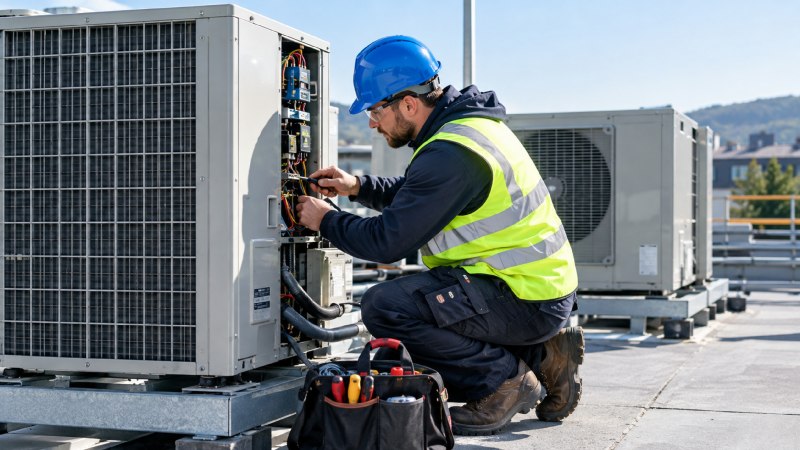
Core Benefits of Energy-Efficient HVAC Installations
Commercial heat pump systems offer a compelling array of advantages for businesses in Hillsboro, OR, extending far beyond simple heating and cooling. These benefits contribute to a more comfortable, cost-effective, and environmentally responsible operation, crucial for thriving in today’s market.
Dual-Temperature Regulation and Enhanced Comfort
One of the primary benefits of commercial heat pumps is their ability to provide both heating and cooling from a single, integrated system. Unlike traditional furnaces and air conditioners that operate independently, a heat pump efficiently transfers heat, moving it into the building during colder months and extracting it during warmer periods. This dual-temperature regulation capability ensures consistent indoor comfort year-round, a critical factor for employee productivity, customer satisfaction, and the preservation of sensitive equipment or inventory.
For businesses in Hillsboro, where seasonal temperature fluctuations can be significant, a heat pump’s seamless transition between heating and cooling modes eliminates the need for separate systems, simplifying maintenance and operation. This integrated approach also allows for more precise temperature control, enabling businesses to maintain optimal thermal conditions across various zones within their facility. For instance, a retail space might require different temperatures than an office area or a storage facility, and modern heat pump systems, especially those with zoning controls, can accommodate these diverse needs effectively.
Significant Reduction in Operating Expenses
The financial advantages of commercial heat pump installation are substantial, primarily driven by their superior energy efficiency. Heat pumps do not generate heat; instead, they move it, a process that is inherently more efficient than burning fossil fuels or using electric resistance. This operational efficiency translates directly into lower utility bills, a welcome relief for any business looking to optimize its bottom line.
The coefficient of performance (COP) and heating seasonal performance factor (HSPF) are key metrics that highlight a heat pump’s efficiency. A higher COP indicates more heating output per unit of electricity consumed, while a higher HSPF reflects better heating efficiency over an entire season. Modern commercial heat pumps boast impressive COPs and HSPFs, often delivering two to three times more heating or cooling energy than the electricity they consume. Over the lifespan of the system, these efficiencies accumulate into significant savings on operating costs. For businesses in Hillsboro, these savings can be reinvested into growth, employee benefits, or other critical operational areas.
Lowering Your Carbon Footprint
As environmental consciousness grows and regulations become stricter, businesses are increasingly seeking ways to reduce their ecological impact. Commercial heat pumps play a pivotal role in achieving this goal. By significantly reducing baseline energy consumption, particularly electricity, they directly contribute to a smaller carbon footprint. When powered by renewable energy sources, the environmental benefits are even more pronounced, approaching near-zero emissions for heating and cooling.
The shift away from fossil fuel-based heating systems, such as natural gas furnaces, also eliminates on-site combustion emissions. This not only benefits the global environment but also improves local air quality, which is a growing concern in urban and suburban areas like Hillsboro. Adopting energy-efficient technologies like commercial heat pumps aligns businesses with sustainable practices, enhancing their public image and appeal to environmentally conscious customers and partners.
Proactive Load Management and Energy Optimization
Beyond daily operational savings, commercial heat pumps facilitate more effective load management within a facility’s electrical infrastructure. Their ability to modulate output based on demand, rather than operating at full capacity or cycling on and off, helps to smooth out electrical load profiles. This can be particularly advantageous during peak demand periods, potentially reducing demand charges from utility providers.
Many advanced heat pump systems incorporate smart controls that allow for precise scheduling and remote monitoring, enabling facility managers to optimize energy use based on occupancy, weather forecasts, and utility rates. This proactive approach to energy management ensures that the system operates at maximum efficiency, preventing unnecessary energy consumption and further contributing to cost savings. For businesses considering comprehensive energy-efficient HVAC services, understanding these benefits is key to making an informed investment.
Planning Energy-Efficient HVAC Installations for Commercial Facilities
Successful commercial heat pump installation in Hillsboro, OR, requires meticulous planning to ensure the system meets the unique demands of the facility. This planning phase involves several critical considerations, from assessing thermal loads to optimizing system sizing and integrating with existing infrastructure.
Assessing Thermal Loads and Zoning Controls
A thorough analysis of the building’s thermal loads is the foundational step. This involves calculating the heating and cooling requirements for each area, considering factors such as building size, insulation levels, window types, occupancy patterns, internal heat gains (from lighting, equipment, and people), and local climate data specific to Hillsboro. Accurate load calculations prevent oversizing or undersizing the system, both of which can lead to inefficiencies and discomfort.
Modern commercial heat pump systems often incorporate advanced zoning controls, allowing different areas of a building to be heated or cooled independently. This is particularly beneficial for commercial spaces with varying usage patterns, such as offices, conference rooms, server rooms, and common areas. Effective zoning maximizes comfort while minimizing energy waste by only conditioning occupied or critical spaces. Implementing zoning requires careful design of ductwork or the selection of multi-zone ductless systems.
Evaluating Electrical Panels and System Sizing
Commercial heat pumps, while highly efficient, rely on electricity for operation. Therefore, a comprehensive evaluation of the existing electrical panels and infrastructure is essential. This includes assessing the available voltage requirements, ampacity capacity, and the need for any subpanel upgrades or new circuit distribution to accommodate the heat pump’s electrical demands. Older commercial buildings in Hillsboro may require significant electrical upgrades to safely and efficiently power a new heat pump system.
Proper system sizing, based on the thermal load calculations, is paramount. An undersized system will struggle to maintain desired temperatures, leading to discomfort and premature wear. An oversized system, conversely, will cycle on and off too frequently (short-cycling), reducing efficiency, increasing wear and tear, and potentially leading to humidity issues. Working with experienced HVAC professionals ensures that the heat pump system is perfectly matched to the facility’s needs, guaranteeing optimal performance and longevity.
Operational Savings and Load Management
The long-term financial viability of commercial heat pump systems is largely driven by their operational savings and sophisticated load management capabilities. These aspects are crucial for businesses in Hillsboro looking to control expenses and enhance sustainability.
Maximizing Operating Costs with High Coefficient of Performance
The core of a heat pump’s efficiency lies in its coefficient of performance (COP). This ratio compares the heating or cooling output to the electrical energy input. A heat pump with a COP of 3.0, for instance, delivers three units of heating or cooling for every one unit of electricity consumed. This makes it significantly more efficient than electric resistance heating (COP of 1.0) and often more cost-effective than natural gas, especially when considering fluctuating energy prices and the environmental impact of fossil fuels.
By leveraging the ambient heat present in the air or ground, heat pumps drastically reduce the amount of purchased energy required to maintain comfortable indoor temperatures. This translates into substantial reductions in ongoing operating costs, providing a competitive edge for businesses. Over a system’s lifespan, these savings can offset the initial investment, yielding a strong return on investment (ROI).
Mitigating Peak Demand Charges
For commercial entities, electricity bills often include demand charges, which are based on the highest rate of electricity consumption during a billing period. Heat pumps, particularly those with variable speed compressors, excel at mitigating these peak demand charges. Unlike traditional systems that often operate at full capacity or nothing, variable speed heat pumps can modulate their output to match the precise heating or cooling load. This ability to ramp up or down smoothly avoids sudden spikes in electricity usage, reducing peak demand and associated costs.
Strategic use of smart thermostats and building management systems (BMS) in conjunction with heat pumps allows for sophisticated load management. Facilities can pre-cool or pre-heat during off-peak hours when electricity rates are lower and then maintain comfort with minimal energy draw during peak times. This intelligent approach to energy consumption is a significant financial benefit for businesses in Hillsboro, OR, especially those with substantial energy requirements.
Leveraging Utility Rebates and Incentives
Many utility companies and government agencies offer incentives and rebates for businesses that invest in energy-efficient HVAC systems, including commercial heat pumps. These programs are designed to encourage the adoption of sustainable technologies and can significantly reduce the upfront installation costs. Businesses in Hillsboro should actively research local, state, and federal programs available in 2026 that promote energy efficiency upgrades.
These incentives can come in various forms, such as direct rebates, tax credits, or low-interest loans. Partnering with a knowledgeable HVAC contractor can help businesses identify and apply for eligible programs, maximizing their savings. These financial incentives, combined with long-term operational savings, make commercial heat pump installations an even more attractive investment for forward-thinking businesses. For more information on optimizing your facility’s energy consumption, exploring comprehensive energy-efficient HVAC services can provide valuable insights.
Integrating Heat Pumps with Modern Commercial Electrical Infrastructure
The transition to commercial heat pumps necessitates a careful review and potential upgrade of a facility’s electrical infrastructure. This integration is crucial for the safe, efficient, and reliable operation of these advanced systems.
Addressing Electrical Load and Cold-Weather Performance
Commercial heat pumps require specific electrical considerations, especially when factoring in their performance in colder climates and the need for supplemental heating.
Understanding Voltage Requirements and Ampacity Capacity
Commercial heat pumps typically operate on higher voltage circuits (e.g., 208V, 230V, 460V) compared to residential units, and their electrical demands can vary significantly based on size and capacity. It’s imperative to assess the existing electrical service to ensure it can handle the new load. This involves verifying the voltage requirements of the chosen heat pump system and confirming that the building’s main electrical panel and feeders have sufficient ampacity capacity. Overlooking these details can lead to electrical overloads, safety hazards, and system malfunctions.
The Role of Subpanel Upgrades and Circuit Distribution
In many commercial retrofit projects, the existing electrical panels may not have enough available circuits or capacity to accommodate a new heat pump system. In such cases, subpanel upgrades or the installation of new dedicated circuits become necessary. Each major component of a commercial heat pump system, such as outdoor compressors, indoor air handlers, and any auxiliary heating elements, often requires its own dedicated circuit for safety and optimal performance. Proper circuit distribution ensures that the electrical load is balanced and that the system can draw the necessary power without tripping breakers or stressing the electrical system.
Variable Refrigerant Flow (VRF) Systems and Power Distribution
For larger commercial facilities, Variable Refrigerant Flow (VRF) systems are a popular heat pump option. These systems can connect multiple indoor units to a single outdoor condensing unit, offering highly flexible zoning and energy efficiency. However, VRF systems also have unique electrical requirements. While they can reduce the number of outdoor units, the central outdoor unit still demands significant power, and the indoor units require their own electrical connections. Careful planning of power distribution across the facility is essential to support the complex network of a VRF system.
High Heating Seasonal Performance Factor (HSPF) Ratings
For Hillsboro, OR, where winter temperatures can dip, the Heating Seasonal Performance Factor (HSPF) is a critical metric for evaluating heat pump efficiency. A higher HSPF rating indicates better heating performance and efficiency over the entire heating season. When selecting a commercial heat pump, prioritizing models with high HSPF ratings ensures that the system will operate efficiently even when the mercury drops, minimizing reliance on supplementary heating.
Auxiliary Heat and Low-Ambient Operation
While modern heat pumps are designed for improved cold-weather performance, there are still thresholds where their efficiency may decrease, typically when outdoor temperatures fall significantly below freezing (e.g., below 25-30°F). In such conditions, auxiliary heat, often in the form of electric resistance coils, may be engaged to maintain indoor comfort. While effective, electric resistance heating is less efficient than the heat pump’s primary operation.
To minimize the use of auxiliary heat, businesses can opt for heat pumps specifically designed for low-ambient operation. These models incorporate advanced inverter technology and enhanced refrigerants to extract heat from colder air more effectively. However, even with these advancements, it’s wise to ensure the electrical infrastructure can support the full load of both the heat pump and its auxiliary heating elements during extreme cold snaps, ensuring continuous comfort and operational integrity.
Selecting the Right System Configuration for Long-Term Value
Choosing the optimal commercial heat pump configuration is a strategic decision that impacts energy efficiency, indoor air quality, and the overall lifecycle value of the system. It’s not merely about installation but about designing a solution that truly serves the business for years to come.
Dual-Fuel Units for Enhanced Performance
In regions like Hillsboro, OR, where winter temperatures can occasionally fall below the optimal operating range for air-source heat pumps, dual-fuel systems offer an excellent solution. A dual-fuel system combines an electric heat pump with a traditional fossil fuel furnace (typically natural gas). The heat pump handles most of the heating load, operating efficiently during milder cold periods. When temperatures drop significantly, and the heat pump’s efficiency declines, the system automatically switches to the more powerful and cost-effective furnace.
This configuration provides the best of both worlds: the high efficiency and lower carbon footprint of a heat pump for the majority of the year, combined with the robust heating capacity of a furnace during extreme cold. This ensures consistent comfort and optimizes energy costs by using the most efficient heating source for prevailing conditions. It also offers a layer of redundancy, enhancing reliability.
Prioritizing Indoor Air Quality (IAQ)
Beyond temperature control, commercial HVAC systems play a crucial role in maintaining healthy indoor air quality (IAQ). Modern commercial heat pump installations offer opportunities to integrate advanced IAQ solutions, which are increasingly important for employee health, productivity, and compliance with building standards.
Key IAQ considerations include:
- Air Filtration: High-efficiency particulate air (HEPA) filters or MERV-rated filters (Minimum Efficiency Reporting Value) can be integrated into heat pump systems to capture dust, pollen, mold spores, and other airborne contaminants. Regular filter replacement, as part of routine maintenance, is vital for maintaining IAQ.
- Ventilation Standards: Ensuring adequate fresh air exchange is critical for diluting indoor pollutants and maintaining healthy oxygen levels. Commercial heat pump systems can be designed to incorporate energy recovery ventilators (ERVs) or heat recovery ventilators (HRVs), which bring in fresh outdoor air while recovering energy from the outgoing stale air, minimizing energy loss. This helps meet ASHRAE (American Society of Heating, Refrigerating and Air-Conditioning Engineers) ventilation standards without significantly increasing energy consumption.
- Humidity Control: Heat pumps are effective at dehumidifying the air during the cooling cycle, which is beneficial for comfort and preventing mold growth. Some advanced systems offer precise humidity control capabilities, further enhancing IAQ.
By selecting a system configuration that addresses these IAQ elements, businesses can create a healthier and more comfortable environment for occupants, which can lead to reduced absenteeism and increased overall well-being.
Best Practices for Energy-Efficient HVAC Installations and Retrofits
To maximize the benefits of a commercial heat pump, the installation process itself must adhere to stringent best practices. This is particularly true for retrofits in existing buildings.
Meticulous Ductwork Sealing and Insulation
Even the most efficient heat pump system will underperform if the ductwork is leaky or poorly insulated. Leaky ducts can lose a significant percentage of conditioned air before it reaches its destination, wasting energy and creating uneven temperatures. Professional ductwork sealing, using mastic sealant or specialized tapes, is essential to prevent air leakage. Additionally, ensuring that ducts are properly insulated, especially when running through unconditioned spaces like attics or crawl spaces, minimizes heat loss in winter and heat gain in summer. This step alone can dramatically improve system efficiency and comfort.
Precise Refrigerant Charging
The correct refrigerant charge is critical for a heat pump’s efficiency and longevity. An undercharged or overcharged system will operate inefficiently, consume more energy, and experience premature wear on components, particularly the compressor. Experienced technicians use precise tools and calculations to ensure the refrigerant charge is exactly as specified by the manufacturer. This attention to detail during installation directly impacts the system’s performance, reliability, and lifespan.
Implementing Preventive Maintenance and Scheduled Tune-Ups
Installation is just the beginning. To ensure long-term value and peak performance, a comprehensive preventive maintenance plan is indispensable. Regular maintenance includes:
- Annual Tune-Ups: Professional tune-ups, typically performed annually, involve cleaning coils, checking refrigerant levels, inspecting electrical connections, lubricating moving parts, and calibrating thermostats. This proactive approach identifies potential issues before they escalate into costly breakdowns.
- Routine Filter Changes: Regular replacement of air filters is crucial for maintaining airflow, system efficiency, and indoor air quality.
- Component Inspections: Technicians inspect all major components for wear and tear, ensuring that the system operates safely and efficiently.
Businesses that invest in routine maintenance for their commercial heat pumps can expect fewer breakdowns, lower repair costs, extended equipment lifespan (often 15-20 years or more), and consistent energy efficiency over the system’s lifecycle. This proactive approach safeguards the investment and ensures continuous comfort for the facility.
Frequently Asked Questions About Commercial Climate Upgrades
As businesses in Hillsboro, OR, consider upgrading their climate control systems, several common questions arise regarding commercial heat pumps. Addressing these concerns helps clarify the benefits and practicalities of such an investment.
How do heat pumps perform during freezing winter temperatures?
Modern commercial heat pumps, especially those designed for colder climates, demonstrate remarkable performance even in freezing temperatures. While older models might have seen a significant drop in efficiency around 40°F, contemporary heat pumps leverage advanced inverter technology. This allows the compressor to modulate its speed, extracting heat more effectively from colder ambient air. Many models are now capable of providing effective heating down to 0°F or even lower, albeit with some reduction in efficiency compared to milder temperatures.
For areas like Hillsboro, where winter lows can occasionally dip well below freezing, it’s common for commercial heat pump installations to include a supplemental heating source. This could be electric resistance coils built into the air handler or, as discussed, a dual-fuel system that switches to a gas furnace during extreme cold. The heat pump handles the majority of the heating load efficiently, with the supplemental heat only engaging when absolutely necessary, thus optimizing overall energy consumption and ensuring continuous comfort. When evaluating systems, look for models with high Heating Seasonal Performance Factor (HSPF) ratings, as these are specifically designed for better cold-climate efficiency.
What electrical upgrades are commonly required for heat pump conversions?
Converting to a commercial heat pump system often necessitates electrical upgrades, particularly in older buildings. The specific requirements depend on the size of the heat pump, the existing electrical infrastructure, and whether auxiliary electric heat is included. Common electrical upgrades include:
- Dedicated Circuits: Commercial heat pumps, especially larger units and their indoor air handlers, typically require dedicated electrical circuits. This ensures they receive a consistent power supply and prevents overloading existing circuits shared with other equipment.
- Increased Ampacity Capacity: The total electrical load of a new heat pump system might exceed the capacity of the existing main electrical panel. This could necessitate upgrading the main service to a higher amperage (e.g., from 100-amp to 200-amp service or higher for larger commercial applications) to safely accommodate the new demand.
- Subpanel Installations: In some cases, installing a new subpanel dedicated to the HVAC system can provide the necessary circuits and power distribution without requiring a full main panel upgrade.
- Voltage Requirements: Commercial heat pumps operate on various voltages (e.g., 208V, 230V, 460V). Ensuring the building’s electrical supply matches the heat pump’s requirements is crucial. Transformers may be needed in some instances.
- Disconnect Switches: Local electrical codes often require outdoor disconnect switches near the heat pump’s outdoor unit for safety during maintenance and emergencies.
A professional HVAC contractor will conduct a thorough electrical assessment during the planning phase to identify and specify all necessary upgrades, ensuring compliance with local codes and safe operation.
How long do commercial heat pump systems typically last?
The lifespan of a commercial heat pump system is a significant factor in its overall return on investment. Generally, a well-installed and properly maintained commercial heat pump can last an average of 15 to 20 years, and sometimes even longer. This lifespan is often comparable to or even exceeds that of traditional commercial air conditioning units and furnaces.
Several factors influence the equipment lifespan:
- Quality of Installation: A professional installation, with correct sizing, precise refrigerant charging, and proper electrical connections, is foundational to longevity. Poor installation can lead to premature wear and failure.
- Routine Maintenance: Consistent preventive maintenance, including annual professional tune-ups and regular filter changes, is paramount. This proactive care helps identify and address minor issues before they become major problems, keeps components clean and operating efficiently, and extends the life of the compressor – often the most expensive component.
- Usage Patterns: Systems that run continuously under heavy loads may experience more wear than those with lighter, intermittent use.
- Manufacturer Quality: Reputable brands often produce more durable and reliable equipment.
- Local Climate: While modern heat pumps handle cold well, extreme and prolonged temperature fluctuations can still impact longevity over decades.
Investing in high-quality equipment and committing to a comprehensive maintenance plan are the best ways to ensure your commercial heat pump reaches the upper end of its expected lifespan, maximizing your investment and providing reliable comfort for years to come.
Conclusion
The decision to invest in commercial heat pump installation in Hillsboro, OR, represents a forward-thinking commitment to operational efficiency, environmental stewardship, and long-term financial health. As we look to late 2026 and beyond, businesses are increasingly recognizing the profound advantages of these versatile systems. From their ability to provide dual-temperature regulation and significantly reduce operating expenses to their role in lowering carbon footprints and enabling sophisticated load management, heat pumps are proving to be an indispensable asset for modern commercial facilities.
By carefully planning the installation, considering factors like thermal loads, electrical infrastructure, and optimal system configurations, businesses can unlock substantial operational savings and enhance indoor comfort. Furthermore, understanding the nuances of cold-weather performance, necessary electrical upgrades, and the importance of routine maintenance ensures that the investment delivers consistent value over its impressive lifespan. Embracing commercial heat pump technology is not just an upgrade; it’s a strategic move towards building electrification, sustainable infrastructure, and intelligent energy management, offering a compelling lifecycle ROI for any business aiming for efficiency and resilience in the years ahead.