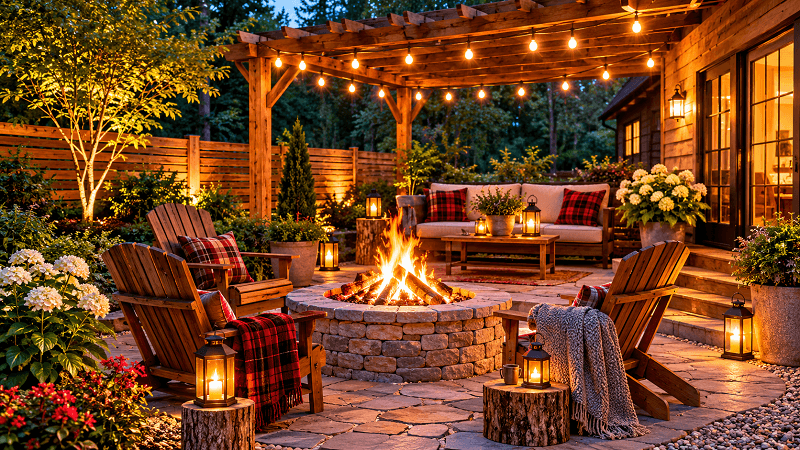
Everyone has had the experience of coming home from a weekend in a cabin and finding the backyard faintly disappointing. The chairs are the same chairs, the lighting still comes from one glaring fixture by the door, and the whole thing feels like a utility area with furniture parked on it. Nothing is wrong with it. It just does not hold you there.
What a cabin does well is rarely expensive and almost never about decor. It is enclosure, warm low light, materials that look better dirty than clean, and a reason to stay outside after the temperature drops. All four translate to a suburban patio, a side yard, or a strip of deck behind a rented duplex.
The mistake is going shopping first. Lanterns and plaid cushions and a carved bear do not add up to a retreat, and a yard full of ornaments reads like a gift shop. Work in the other order: shape the space, choose materials, then light it, then furnish it. Here is how that sequence usually plays out.
Enclosure Comes Before Anything You Can Buy
A cabin feels sheltered because something is always close: trees on three sides, a porch roof, a low ceiling. An open rectangle of lawn offers your eye nothing to land on, which is why it never feels restful. Penn State Extension Master Gardeners describe outdoor spaces in terms of a ground plane, a vertical plane and an overhead plane, which is a useful way to notice what your yard is missing.
Vertical enclosure can be implied rather than built. Two tall planters flanking a bench, a low hedge between the patio and the grass, or a single run of cedar screen on the side facing the neighbors will all do it. Overhead, a pergola works and so does a market umbrella, and a mature tree with a wide canopy does it for free.
Materials That Improve as They Weather
Cabins are forgiving because almost everything in them is already imperfect. Unfinished cedar, stone, iron, wool, canvas: all of it absorbs wear instead of recording it, which is the opposite of powder coated aluminum or glossy composite that looks wrong the first time it scratches.
Keep the palette short. Three materials loosely related in tone feel collected, six feel accidental, and the cheapest way to look deliberate is to repeat one thing. Gravel underfoot in the low traffic zone, flagstone where chairs actually go, and timber for the vertical elements will carry a whole yard. The layouts of vacation log cabins are a good reference, since those floor plans lean on a small number of honest materials and a strong link between interior and deck.
Light Low, Warm, and in Several Places
One bright fixture mounted high by the back door is the single biggest reason a yard feels like a parking lot. Cabins are lit from table height and below, in warm color temperatures, from several weak sources rather than one strong one. That is the whole trick, and it costs very little to copy.
Run a string of filament bulbs across the overhead plane, set two or three lanterns on the ground at the edges of the seating, and put a dimmer or a smart plug on anything hardwired. Skip the cool white floods entirely. If you need security lighting, keep it on a motion sensor so it is not part of the evening.
Greenery Chosen for the Site, Not the Mood Board
Plants are what keep the space from reading as staged, and they are also where most of the money gets wasted. Clemson’s Home and Garden Information Center is blunt about the reason: sun hours, soil, drainage and root space decide what survives, and a full sun shrub tucked under an established canopy will bend, thin out and eventually fail.
Watch the site for a season if you can, then plant in layers: something tall for the vertical plane, mid height shrubs or grasses to soften the edges, and containers you can move when you get the arrangement wrong. Ferns, moss, and anything with a soft texture read as woodland even in a city lot, and native species will ask less of you in August.
Heat Is What Buys You the Extra Months
A retreat you can only use in July is a seasonal decoration. Heat is the difference, and it is why a fire feature tends to become the thing the yard is organized around. A built fire pit with a seating wall will anchor a space the way a hearth anchors a cabin great room, and even a modest one pulls people outside in October. The case for custom brick fire pits rests on exactly that.
Clearances matter more than aesthetics here. Keep the fire well away from the house, the overhead plane, and anything stacked nearby, put a spark screen on a wood burner, and check the local burn rules before the first cold night. Blankets, a basket of split wood, and somewhere to set a mug finish the job.
None of this has to happen at once, and it probably should not. Pick the corner you already drift toward, enclose it, light it properly, and live with that for a month before extending anything. Yards built in stages tend to look planned, while yards bought in one weekend tend to look purchased.
The reason cabin living is worth imitating is not nostalgia. It is that a small, sheltered, warmly lit space with honest materials is simply more comfortable than a large exposed one, and comfort is the only measure that matters once the sun is down.