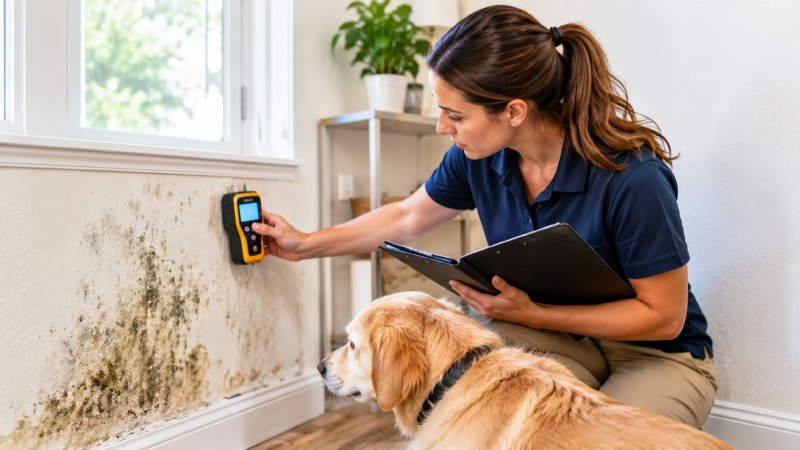
A musty smell can be frustrating because it often appears before there is an obvious stain, leak, or patch of visible growth. It may come from damp building materials, poor airflow, old water damage, or microbial growth in an enclosed area. Understanding how mold detection dogs find hidden mold can also help homeowners see why an odor investigation sometimes requires more than a quick look around the room.
Odor is a clue, not a diagnosis. A clean-looking bedroom that smells earthy after rain, for example, could have condensation near an exterior wall, a slow window leak, damp carpet padding, or another moisture issue that is not visible from the surface. The goal is to identify the source of moisture and investigate only as far as the evidence warrants.
Why a Musty Odor Deserves Attention
Musty odors are commonly associated with dampness. They can linger when materials such as drywall paper, wood trim, carpet backing, insulation, or dust have remained wet long enough to develop an odor. The smell may be strongest after rain, during humid weather, when the HVAC system starts, or when a closet or cabinet has been closed for a while.
The important question is not whether a room has a particular “mold smell.” It is whether there is evidence of a water or humidity problem that needs correction. Ignoring a persistent odor can allow a small repair to become a larger one.
Common Places Hidden Mold May Be Found
Hidden mold is not guaranteed in every dark, old, or humid area. Still, moisture problems often occur in locations that are difficult to inspect without moving belongings, using tools, or opening a small access point. Common areas include:
- Behind drywall, wall coverings, and baseboards near a past leak.
- Under carpet, padding, laminate, or other flooring after a spill or flood.
- Below sinks, inside cabinets, and behind appliances with water lines.
- Near windows, doors, and cold exterior walls where condensation develops.
- In attics below roof leaks and around improperly vented bathroom exhausts.
- In crawlspaces, basements, utility rooms, and HVAC condensate areas.
Moisture Clues to Check First
Since mold needs moisture to grow indoors, an inspection should begin with the building conditions that keep materials wet. The EPA emphasizes moisture control, prompt leak repair, ventilation, and complete drying of wet areas as practical ways to reduce biological contaminants indoors. Immediately fixing leaks and visible moisture issues is more effective than masking odors with fragrance or through repeated cleaning.
- Water stains, bubbling paint, peeling wallpaper, or soft drywall.
- Swollen trim, warped flooring, or carpet that feels damp.
- Condensation on windows, pipes, or uninsulated surfaces.
- A history of roof damage, plumbing leaks, sewer backups, or flooding.
- Bathrooms, laundry rooms, or basements that stay humid or poorly ventilated.
How Inspection Methods Differ
No single tool can answer every question. A careful visual inspection can identify stains, damaged finishes, leaks, and areas where water is likely entering. A moisture meter can help compare readings across materials, while thermal imaging may reveal temperature differences that suggest an area needs closer moisture testing.
When the suspected area is enclosed, a small borescope camera opening may allow a closer look inside a wall or ceiling cavity. Surface sampling can evaluate a specific material, and air sampling can characterize airborne particles at the time and place of collection. Each method has limits, so results should be considered with the building history, odors, visible conditions, and moisture findings.
What Scent-Based Detection Can Add
Trained canine teams may be used to narrow a search when an odor persists, but the suspected source is hidden behind finishes or beneath flooring. The dog works with a handler and indicates an area that merits further examination. This can help focus the investigation rather than opening broad sections of wall or floor without a clear reason.
However, a canine alert is not a final diagnosis by itself. Airflow, cleaning products, pets, stored items, and other household odors can complicate an inspection. A responsible follow-up process considers the alert alongside moisture evidence, accessible visual conditions, and, when appropriate, targeted confirmation before making repair or remediation decisions.
Why a Negative Air Test May Not Settle It
A short-term air sample reflects conditions at one location over a limited period. It may not capture a hidden reservoir sealed behind a wall, beneath flooring, or one that releases few particles during sample collection. According to CDC and NIOSH guidance on mold testing and remediation, there are no health-based standards for indoor mold, and routine air sampling is not recommended as the sole method for assessing a building.
A negative result does not erase evidence of ongoing dampness, and a higher result does not automatically identify the source. Thorough visual review and musty odors can be more useful starting points when the goal is to locate a building problem.
A Safe Homeowner Action Plan
- Document the pattern. Note when the odor occurs, which rooms are affected, and whether rain or HVAC use changes it.
- Look for active moisture. Check plumbing, windows, roofing, basements, crawlspaces, and condensate drains.
- Track humidity. A basic hygrometer can help identify rooms that remain unusually damp.
- Photograph changes. Images of stains, swelling, and repairs can be useful for monitoring progress.
- Avoid unnecessary disturbance. Do not tear into suspect materials without a repair and containment plan in place.
- Correct the water source. Drying and cleaning will not provide a lasting solution if water continues to enter.
When Professional Help Makes Sense
Consider qualified inspection or remediation help when the odor continues after moisture control, a flood or leak affected porous materials, growth may be inside walls or HVAC components, or a previous cleanup did not solve the problem. Extra care is also reasonable when household members have asthma, allergies, immune conditions, or strong reactions in damp spaces.
Reducing Future Mold Risk
Prevention comes back to routine maintenance. Repair leaks promptly, use bathroom and kitchen exhaust fans, keep gutters and downspouts working, inspect around windows after heavy rain, and address condensation before it repeatedly wets finishes. Check basements, crawlspaces, attic areas, and HVAC equipment regularly, especially after storms or plumbing repairs.
A musty smell should be treated as useful information, not a reason for panic. Careful observation, moisture control, appropriate inspection tools, and targeted follow-up can reveal the cause while helping avoid unnecessary damage to the home.