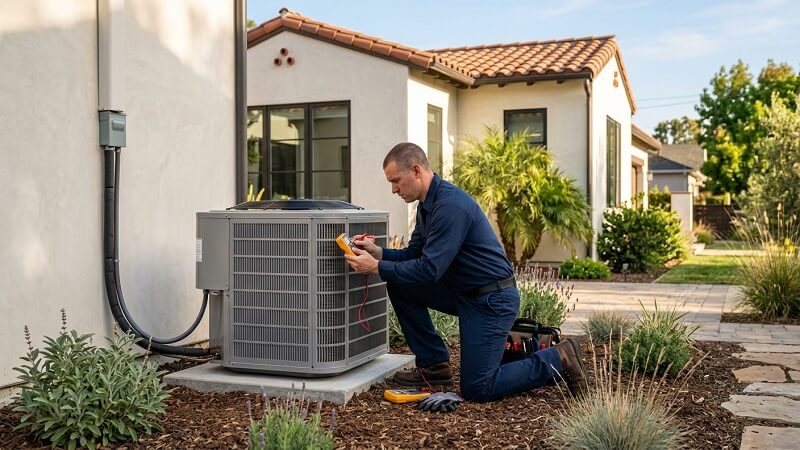
Keeping the air inside your house cool and healthy becomes really important for daily comfort once summer heat and humidity start climbing. One of the best ways to control indoor temperatures and pull heavy seasonal moisture out of your rooms is putting in a central air conditioning setup. Getting quiet and efficient cooling, however, takes much more than simply walking into a store and picking an air conditioner with high ratings. Proper system sizing, checking the ductwork, and matching the right parts together are what decide how well your
new unit works over its whole life.
Having a clear grasp of how heat moves inside a house is necessary before you spend money on a central cooling machine. Getting refrigerant line sizes right, doing proper electrical hookups, and balancing the air handler directly affect power bills and how long the gear lasts, as learning materials on home air quality and cooling from experts like Browns Plumbing and Heating point out. You will go through the installation process with much more confidence if you take a little time to understand how these cooling units strip out heat and water vapor.
How Central Air Conditioning Systems Remove Indoor Heat
Air conditioners work simply by pushing cold air straight into a room, or at least that is what lots of homeowners think. Pulling heat and moisture out of your indoor air and dumping it outside is actually the real job of air conditioning.
A closed loop of chemical refrigerant moving back and forth between two main parts—an indoor evaporator coil and an outdoor condenser unit—is what this whole process depends on:
- Your furnace blower fan pulls warm air from inside your house right across the cold evaporator coil.
- Liquid refrigerant inside that coil soaks up heat energy from the air, turning itself into a warm gas.
- This gas gets pumped outside to the compressor and condenser coil, where a big fan blows the captured heat out into the open air.
- Water vapor in the warm indoor air turns into liquid drops on the cold indoor coil once the heat gets pulled out, draining safely away through a condensate pipe.
The Importance of Correct System Sizing and Load Calculations
The single biggest factor behind a successful AC installation is picking the exact right cooling
power, which gets measured in tons or BTUs.
Why Oversized Air Conditioners Fail to Dehumidify: Pulling moisture out of the air matters just as much as dropping the room temperature when the summer weather turns sticky and humid. An air conditioner that is way too big turns itself off before finishing a full moisture-removal cycle because it cools the house down so fast. Because of this, your house ends up feeling cold and damp, creating a great spot for surface mold and dust mites to grow. Extra wear also gets put on the compressor motor from turning on and off rapidly.
Why Undersized Systems Overwork: Enough cooling power to handle the hottest summer days is simply missing in an air conditioner that is too small. Without ever hitting your chosen thermostat number, the outside unit ends up running nonstop, which causes high power bills, loud noise, and eventually makes the machine overheat.
Primary Types of Residential Cooling Systems
You get to pick from a few different cooling system designs depending on what kind of setup
your house already has.
Central Split Systems: An outdoor condensing unit connects with the forced-air furnace and
ductwork already inside your house in a central split setup. This is the most usual way to install
cooling for homes that already rely on central air ducts for heating. Cool air gets spread evenly
across the whole house through your existing floor and ceiling vents.
Heat Pumps in Cooling Mode: A central air conditioner that knows how to run in reverse is
basically what a heat pump is. It pulls heat from inside your house and pushes it outside during
hot summer months, just like a normal air conditioner does. It flips the refrigerant flow around to
warm up your house efficiently the moment autumn and spring arrive.
Ductless Mini-Split Air Conditioners: Ductless mini-splits give you a great answer for older
houses without air ducts, new room additions, or separate suites. Using thin refrigerant pipes,
one outdoor unit links up to one or more small indoor blowers mounted on the wall. You never
have to install bulky air ducts, and cooling specific rooms separately becomes easy this way.
Decoding Efficiency Metrics: SEER and SEER2 Ratings
You are going to see SEER (Seasonal Energy Efficiency Ratio) or SEER2 numbers whenever
you compare different cooling models.
● What the rating means: Total cooling output across a normal summer season divided
by the total electric power used is what SEER calculates, and higher numbers always
mean better energy efficiency.
● Current standards: While high-efficiency machines can climb up to 20 SEER2 or even
higher, basic efficiency ratings normally begin around 13 to 15 SEER2.
● Evaluating local payback: How fast high-SEER units pay you back depends a lot on
how long your local summer lasts, even though they burn noticeably less electricity.
Mid-level efficiency models often give you the smartest balance between upfront buying
price and seasonal power savings in areas with short, sharp summer seasons.
Step-by-Step AC Installation Checklist
Verify that your installation work covers these exact steps so your new gear gets set up without
a hitch:
● Site selection: In a shaded spot away from falling roof water or thick garden bushes, set
the outdoor condenser unit on a firm, flat pad.
● Ductwork inspection: So cool air does not escape into unconditioned attic or crawl
spaces, close up air leaks at duct joints.
● Refrigerant line protection: Proper insulation must be wrapped around copper pipe
sets to stop water drips and heat energy loss.
● Condensate drain testing: Make sure water never backs up by checking that the
condensate drain pipe slopes downward properly and has a cleanout trap.
● System commissioning: Before finishing up the work, have the technician check
refrigerant pressures, electrical voltage draws, and airflow speed across the indoor coil.
All through the summer season, you can enjoy a quiet, cool, and dry house when you focus on
exact sizing, smart moisture control, and proper equipment testing.