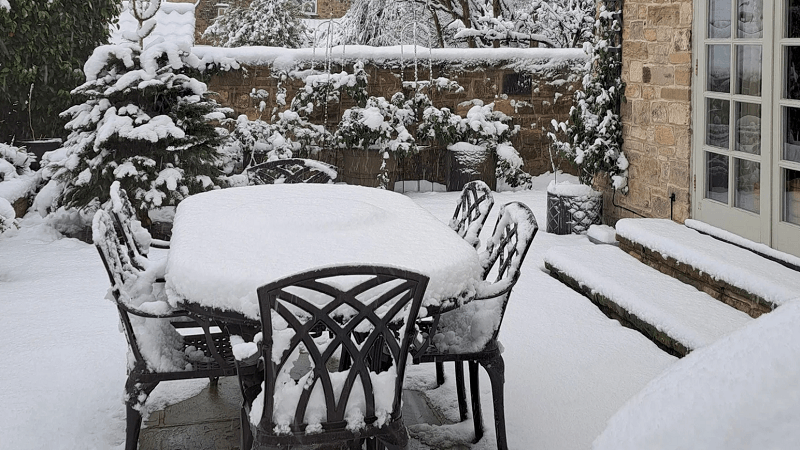
Garden furniture in cold climates faces a different set of challenges than furniture used in mild or dry regions. Long winters bring snow, ice, freezing rain, and repeated temperature swings. Moisture freezes inside small cracks, expands, and weakens structures. Metal can corrode when coatings fail. Wood can swell, split, or warp. Even plastic materials degrade when exposed to months of cold and ultraviolet light.
Many homeowners buy outdoor furniture based on summer comfort or visual style. The first winter often exposes weaknesses in construction or material choice. A chair that feels sturdy in June may develop loose joints by February. A metal frame that looked pristine in autumn may show rust after several snowstorms.
Cold climates require furniture built to handle moisture, freezing temperatures, and long periods without use. The best materials share several characteristics. They resist water absorption, tolerate repeated freeze–thaw cycles, and maintain structural strength under snow load. They also require limited maintenance, since winter conditions make frequent upkeep impractical.
Several materials consistently perform well in colder regions. Dense hardwoods, aluminum frames, modern recycled plastics, and certain stone or concrete designs have proven durable across northern Europe, Canada, and mountain regions of the United States. Each option offers advantages depending on the type of garden, the level of maintenance a homeowner accepts, and the overall design of the outdoor space.
The following sections examine these materials in detail, supported by real examples from cold climates where garden furniture must survive months of snow and freezing temperatures.
Teak and Dense Hardwoods: Natural Durability in Cold Weather
Dense hardwoods remain one of the most reliable materials for outdoor furniture in cold climates. Certain species developed natural defenses against moisture, insects, and decay. These traits make them well suited for environments where snow and rain dominate much of the year.
Teak is the most widely known example. The wood contains natural oils that protect the internal fibers from water penetration. This oil content slows swelling and shrinking during temperature changes. As a result, teak furniture maintains structural stability during winter.
Many coastal towns in Norway use teak benches and outdoor seating near harbors. These installations remain exposed to snow and freezing sea air throughout the winter. Over time the wood turns a silver-grey color, but the structural integrity remains intact.
Robinia, sometimes called black locust, offers similar durability. European cities often install robinia benches in public parks because the wood resists rot and moisture. The dense grain structure prevents water from soaking deeply into the material, which reduces the risk of cracking when temperatures drop below freezing.
Eucalyptus is another hardwood option. It does not contain the same level of natural oil as teak, but its dense fibers still handle moisture well when properly sealed. Many mountain lodges in Austria and Switzerland use eucalyptus outdoor dining sets on terraces that remain exposed to snow.
Hardwood furniture requires occasional maintenance. Owners often apply oil treatments once or twice per year to maintain surface protection. Even without oil, teak and robinia maintain strength for many years. The surface color gradually fades to grey, which many homeowners accept as part of the natural aging process.
Quality construction also matters. Hardwood frames perform best when manufacturers use strong joinery methods such as mortise and tenon joints instead of simple screws. These joints distribute stress across the wood and prevent loosening during seasonal expansion and contraction.
Cold climates reward hardwood furniture built with solid frames and minimal exposed fasteners. These designs reduce weak points where moisture can accumulate and freeze.
Aluminum Frames: Lightweight and Resistant to Corrosion
Aluminum has become one of the most common materials for garden furniture in colder regions. The metal offers several advantages that make it well suited to winter conditions.
First, aluminum does not rust. Unlike steel or iron, the metal forms a thin oxide layer that protects the surface from corrosion. Snow and ice do not damage untreated aluminum in the same way they affect other metals.
Second, aluminum remains structurally stable across a wide range of temperatures. Freezing weather does not weaken the material. Temperature swings between winter and summer cause minimal expansion compared with many other materials.
Third, aluminum furniture remains relatively light while maintaining structural strength. This allows homeowners to move chairs or tables indoors during severe weather if desired.
Powder coating improves aluminum durability even further. Manufacturers apply a dry powder finish that bonds to the metal surface during heating. This coating creates a protective barrier against moisture and scratches.
Outdoor cafés in cities such as Toronto often use powder-coated aluminum chairs and tables. These seating areas remain outside throughout winter. Snow removal crews stack the furniture near building walls, and the metal frames typically show little damage when spring arrives.
Aluminum also works well in combination with other materials. Many garden sets combine aluminum frames with hardwood tabletops or composite surfaces. This hybrid design balances durability with a natural appearance.
The main limitation of aluminum furniture involves stability during strong winds. Because the frames remain relatively light, unsecured chairs may move during storms. Some designs solve this issue by using heavier bases or integrated cushions that add weight.
Aluminum remains one of the lowest-maintenance choices for cold climates. Most owners clean the frames with water and mild soap once or twice per year. The powder coating protects the metal from corrosion and helps maintain appearance for many seasons.
Stainless Steel and Coated Steel: Strong but Maintenance Sensitive
Steel furniture offers high strength and weight, which makes it useful in certain outdoor environments. The material supports larger structures such as benches, dining tables, or pergola seating areas.
However, steel requires careful finishing in cold climates. Moisture and snow can cause corrosion if protective coatings fail.
Stainless steel solves part of this problem. The metal contains chromium, which forms a corrosion-resistant layer on the surface. This layer protects the internal metal from rust. Stainless steel frames often appear in high-end outdoor dining sets or modern garden furniture collections.
Urban plazas across northern Europe frequently install stainless steel benches because the material tolerates snow, road salt, and heavy public use. These installations require little maintenance beyond periodic cleaning.
Powder-coated steel offers another option. Manufacturers apply the same protective coating used for aluminum frames. The coating seals the surface and reduces exposure to moisture.
Many ski resorts use powder-coated steel furniture around outdoor fire pits or communal seating areas. These environments experience heavy snow and strong winds. The added weight of steel prevents chairs and tables from shifting during storms.
Owners must monitor steel furniture for scratches or damaged coatings. When the protective layer breaks, moisture can reach the metal underneath. Rust may develop if the area remains untreated.
Regular inspection helps prevent corrosion. Small scratches can be sealed with touch-up paint or protective coatings. When maintained properly, coated steel furniture can last many years in cold climates.
Recycled Plastic and HDPE: Modern Materials Built for Harsh Weather
Modern outdoor furniture increasingly relies on synthetic materials designed specifically for severe weather conditions. High-density polyethylene, commonly called HDPE, stands out as one of the most durable options.
HDPE furniture often appears under brand names such as poly lumber or recycled plastic furniture. Manufacturers create the material by compressing recycled plastic into dense boards that resemble wood.
Unlike natural wood, HDPE does not absorb water. Snow and rain remain on the surface rather than penetrating the material. When temperatures drop below freezing, the lack of absorbed moisture prevents cracking.
Adirondack chairs made from HDPE have become common in cold regions of the United States. Towns in Vermont and Maine install these chairs along lakeshores and public parks. The furniture remains outdoors throughout winter without damage.
HDPE furniture also resists ultraviolet radiation better than many other plastics. Manufacturers add stabilizers during production to reduce fading and brittleness caused by sun exposure.
Another advantage involves maintenance. HDPE surfaces do not require oiling, sealing, or painting. Owners usually clean them with water and mild detergent.
Synthetic wicker furniture uses similar materials. Traditional wicker made from natural fibers deteriorates quickly when exposed to moisture. Modern polyethylene wicker replicates the woven appearance while resisting water and temperature changes.
Many Canadian homes use synthetic wicker lounge sets on patios and balconies. The furniture remains functional after winters that bring heavy snow and prolonged freezing temperatures.
Synthetic materials do have aesthetic differences compared with natural wood. Some homeowners prefer the texture and aging characteristics of hardwood furniture. However, HDPE and similar materials provide practical solutions for people who want minimal maintenance and long-term durability.
Concrete and Stone: Permanent Outdoor Furniture
Concrete and stone represent another category of garden furniture well suited to cold climates. These materials tolerate extreme temperature changes and heavy snow loads without structural damage.
Concrete furniture has grown popular in modern outdoor design. Tables, benches, and seating blocks constructed from reinforced concrete remain stable in harsh environments. When properly sealed, concrete resists water penetration and frost damage.
Scandinavian homes often incorporate concrete dining tables on outdoor terraces. The heavy construction prevents movement during strong winter winds. Owners leave the furniture outside year-round.
Stone benches also appear frequently in public gardens and alpine resorts. Granite and similar stones maintain structural strength under freezing conditions. Their natural density prevents moisture from penetrating deeply enough to cause cracking.
The main drawback of stone or concrete furniture involves weight. Once installed, these pieces rarely move. This suits permanent garden layouts but may limit flexibility when rearranging outdoor spaces.
Sealing treatments improve longevity. Many manufacturers apply protective coatings that prevent water absorption. Homeowners sometimes reapply sealants every few years to maintain surface protection.
Hybrid designs combine stone or concrete bases with other materials such as hardwood tops or metal frames. These designs balance durability with visual warmth.
Permanent furniture works particularly well in gardens designed around fixed features such as fire pits, terraces, or outdoor kitchens. The materials tolerate harsh winters while maintaining a stable presence within the garden layout.
Real Gardens in Cold Climates: Material Choices That Work
Real-world examples illustrate how homeowners and designers combine materials to create durable outdoor spaces in cold regions.
In Oslo, many residential courtyards use teak dining tables paired with aluminum chairs. The hardwood surface provides warmth and texture, while the aluminum frames resist corrosion during winter snow.
In Quebec City, synthetic Adirondack chairs appear along public promenades near the river. The chairs remain outdoors throughout winter, often partially buried in snow. Municipal crews simply brush them off when spring arrives.
Mountain cabins in Colorado frequently use powder-coated steel dining sets around outdoor fire pits. The heavier construction keeps furniture stable during strong winds common at higher elevations.
Swiss alpine hotels often combine robinia wood benches with stone bases on terraces overlooking ski slopes. The wood surfaces remain comfortable during summer, while the stone supports tolerate heavy snow loads.
Urban rooftop gardens also demonstrate practical combinations. Many apartment buildings in northern cities install HDPE seating with aluminum frames. These materials resist both weather exposure and the structural limitations of rooftop installations.
One restaurant terrace in Stockholm illustrates how durable materials integrate into commercial outdoor spaces. The dining area uses aluminum-framed chairs and weather-resistant tabletops designed to resemble restaurant tables typically found indoors. Staff stack the furniture during winter storms, but the materials withstand freezing conditions without damage.
These examples show how different materials perform when exposed to real winter climates. Successful outdoor spaces rarely rely on a single material. Instead, designers combine durability, maintenance considerations, and visual style.
Choosing Materials for Your Own Garden
Selecting the best material depends on several factors beyond climate alone. The severity of winter conditions, the size of the garden, and the amount of maintenance an owner accepts all influence the final choice.
Hardwood furniture suits gardens where natural aesthetics matter. Teak and robinia offer long lifespans and attractive aging patterns. Owners must accept occasional oiling and gradual color changes.
Aluminum frames provide a practical balance of durability and low maintenance. These designs suit patios, balconies, and gardens where furniture may move frequently.
HDPE or recycled plastic furniture works well for homeowners who prefer minimal upkeep. The material tolerates moisture, snow, and sunlight without requiring protective treatments.
Steel furniture offers strength for larger seating arrangements, particularly when powder-coated or constructed from stainless steel. Owners must monitor protective coatings to prevent corrosion.
Stone and concrete furniture suit permanent installations such as outdoor dining areas, fire pits, or terraces. Their weight and durability allow them to remain outdoors year-round.
The most durable garden spaces often combine several materials. A hardwood table paired with aluminum chairs, or a concrete bench placed near synthetic lounge seating, can create a balanced outdoor environment capable of surviving harsh winters.
Cold climates demand thoughtful material selection. Furniture designed for warm regions may not withstand months of snow and freezing temperatures. By choosing materials proven to perform in northern environments, homeowners create outdoor spaces that remain functional and attractive across many winters.