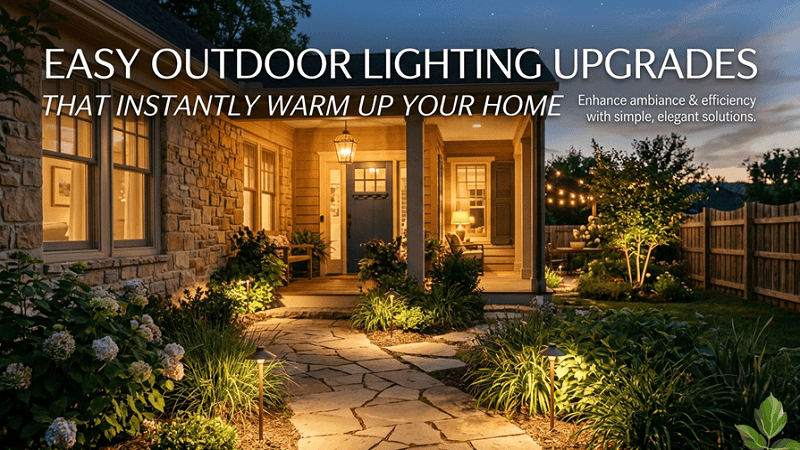
The right outdoor lighting can make the difference between a house that feels cold and one that quietly invites people in. Soft light along a path, a warm glow by the front door, and a few accents in the garden can turn even a small space into somewhere you want to linger at the end of the day. According to the U.S. Department of Energy, modern LED lighting can now be up to 90 percent more efficient than traditional bulbs, which makes upgrades feel a lot more practical for everyday homes.
That is why choosing quality outdoor house lighting fixtures matters so much for both comfort and function. Instead of relying on one harsh floodlight, you can mix wall lanterns, path lights, and subtle spotlights that highlight plants or textures. Done well, your lighting not only looks beautiful, it also makes it easier to move around outside, welcome guests, and feel relaxed when you pull into the driveway.
You do not need a full renovation to get there. With a few smart choices, you can warm up your entrance, patio, and garden over a weekend, using fixtures and hardware that will keep working season after season.
1. Start With Warm, Layered Light At The Front Door
If you only upgrade one area, start at the entrance. This is the first place people see and the spot you use every single day. Many homes rely on a single bright ceiling light that flattens everything and throws deep shadows.
A better approach is to layer light at different heights. For example, combine a pair of wall lanterns beside the door with a softer recessed or pendant light above. Data from an outdoor lighting market report shows that demand for decorative LED fixtures has been growing steadily as homeowners look for both style and efficiency. Choose warm white bulbs in the 2700K to 3000K range so faces look natural, and the area feels cozy rather than clinical.
Think about glare, too. Frosted glass, shades, or fixtures with downward-facing designs keep the light comfortable for both you and your neighbors.
2. Use Path And Step Lighting For Safety That Still Feels Cozy
Outdoor lighting is often sold as a way to “boost security,” but the research on crime is a bit more nuanced. Some studies on street lighting have found that better lighting in public spaces can reduce certain crimes at night, while others show the effect is smaller than people expect. Around your home, the goal is more about visibility and comfort than turning your yard into a stadium.
Low-level path and step lighting is perfect for this. Instead of a single bright floodlight, install small fixtures that wash light gently across the ground. This helps you see edges, stairs, and changes in level, which is especially helpful when you have guests over or kids running around after sunset. A UK garden lighting guide notes that step and decking lights make outdoor spaces safer to move through while still keeping a relaxed atmosphere.
You can find solar path lights for quick wins, but for long-term reliability, wired low-voltage systems often hold up better in varied weather.
3. Highlight Plants And Textures, Not Just Walls
If your backyard feels flat at night, it is usually because all the light is stuck near the house. When you push some of that light out into the garden, the space suddenly feels larger and more interesting.
Try these simple ideas: aim a small spotlight at the trunk of a mature tree, wash a beam across a stone or brick wall, or graze light up a textured fence panel. Landscape designers often rely on this “accent lighting” to create depth and soften hard edges in outdoor spaces. Warm-toned LED spotlights are ideal, and you can start with just two or three fixtures to see where they make the biggest difference.
Avoid lighting every plant. Leaving some areas darker gives your eye places to rest and helps the highlighted features stand out.
4. Add Smarter Control With The Right House & Home Hardware
Once you have a few key fixtures in place, the next upgrade is how you control them. This is where the right house & home hardware can quietly make your life easier. Simple additions like dusk-to-dawn sensors, motion detectors in specific zones, and smart plugs or switches help you save energy and avoid fumbling for switches in the dark.
Modern systems let you schedule lights to come on at sunset and turn off late in the evening, even if you are away. A 2024 LED trends report highlights how smart controls are becoming standard as people look to cut energy use without sacrificing comfort. You can start small, for example, by putting your porch lights on a smart timer, then expand to garden and path lighting over time.
If you are using smart bulbs or fixtures, keep your app setup simple. Group lights by area, like “front,” “patio,” or “garden,” so you can adjust them quickly when you have guests or want a quieter evening.
5. Keep It Efficient, Weatherproof, And Low Maintenance
Warm, beautiful outdoor lighting is only helpful if it still works after a few winters. When you choose fixtures, look for damp or wet location ratings, solid metal or high-quality composite materials, and properly sealed housings. This protects against rust, insects, and water getting in.
LED technology has advanced a lot in recent years. According to the U.S. Department of Energy, long-life LED bulbs can last many times longer than incandescent, which means fewer climbs up the ladder and lower replacement costs. Pairing efficient LEDs with timers or sensors can have a noticeable impact on your monthly electricity use, especially if you have multiple outdoor zones.
Clean the glass and wipe down fixtures a couple of times a year. A quick check in spring and fall keeps everything looking fresh and lets you spot loose screws or damaged wiring early.
Real-World Application: Three Quick Weekend Lighting Makeovers
Upgrading outdoor lighting often feels intimidating until you see how simple some changes can be. Here are three scenarios you can adapt to your own home.
First, imagine a small front porch with one outdated ceiling light. Over a weekend, you could replace it with a warm-toned pendant, add two matching wall lanterns beside the door, and connect them to a smart switch with a sunset schedule. The result is an entrance that feels welcoming and finished every evening without you thinking about it.
Second, picture a narrow side path that everyone uses, but nobody likes at night. Add low-voltage path lights every few feet, a discreet step light near any changes in level, and a motion sensor at the entry point. This makes it easier to bring in groceries, take out the trash, or walk the dog after dark without facing harsh lighting.
Third, think about a basic patio with a single security light on the wall. Swap that bright fixture for one with adjustable brightness, hang string or festoon lights overhead, and place a few small spotlights to pick out a favorite tree or planter. Studies of garden design show that warm, layered light on patios encourages people to spend more time outside relaxing or entertaining.
A simple checklist to guide your own weekend project: pick one focus area, choose warm LEDs, layer at least two types of light, add timed or smart control, and finish with a quick safety check of all wiring and mounts.
FAQs
What color temperature is best for outdoor lights if I want a cozy feel?
For a warm, inviting look, choose bulbs between 2700K and 3000K, which give a soft, amber tone similar to traditional incandescent lighting. Lighting designers often prefer this range for patios, porches, and seating areas.
Do outdoor lights really make my home safer at night?
Good lighting helps you see steps, paths, and visitors more clearly, which can reduce trips and make you feel more at ease. Research on crime is mixed, but several studies suggest that well-planned lighting in public and shared spaces can reduce certain nighttime crimes by around 14 to 36 percent, especially when combined with other safety measures. Around your home, focus on lighting entrances, paths, and dark corners without creating glare.
How can I cut energy costs if I add more outdoor lighting?
The simplest steps are to use LED bulbs, add timers or smart controls, and avoid leaving lights on all night in areas you rarely use. Recent reports show that LED lighting can use up to 90 percent less energy than traditional incandescent bulbs, which means you can often increase the number of fixtures while keeping your electricity bill steady or even lower. Motion sensors in low-traffic zones like side yards also help.
Can I install outdoor lighting upgrades myself, or do I need an electrician?
Many basic upgrades are DIY-friendly, like swapping fixtures on existing boxes, adding solar path lights, or using plug-in string lights and smart plugs. If you are running new wiring, working with high-voltage lines, or adding complex smart systems, it is safer to hire a licensed electrician. This helps ensure your installation meets local codes and stays reliable in all weather.
Bottom Line..
When you treat outdoor lighting as part of how your home feels, not just how it looks, the changes you make tend to last. A few well-chosen fixtures, warm bulbs, and thoughtful controls can turn an overlooked yard or entry into a place you look forward to seeing every evening. You do not need a huge budget to get there, just a clear plan and a focus on comfort.
Start with one area that bothers you the most, upgrade it with warm layered light, and live with it for a couple of weeks. Once you see how much more welcoming it feels, you can roll the same approach out to paths, patios, and garden corners at your own pace. Over time, those easy outdoor lighting upgrades quietly turn your house into a home that greets you, your family, and your guests with a softer glow every night.