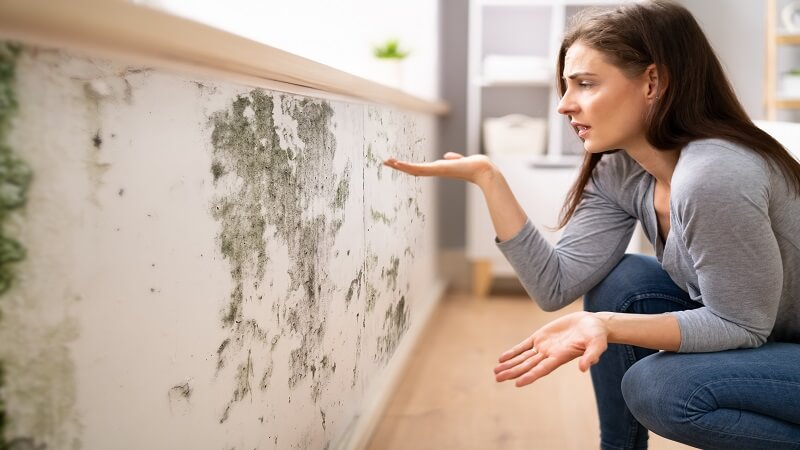
Imagine this: You have just closed on a beautiful home in Overland Park or Wichita. The inspection report was clean, the major systems passed with flying colors, and you have the keys in hand. Three weeks after moving in, you notice a faint, earthy smell in the basement or a small patch of gray fuzz behind the guest room curtains.
Most homebuyers assume a standard home inspection is a comprehensive health check for the property. The reality is far more nuanced. While inspectors are vital for spotting structural flaws, mold is an elusive, biological threat that often falls entirely outside their standard scope of work. Understanding the gap between a “passed inspection” and a mold-free home is the only way to protect your investment in the Kansas climate.
What a Standard Home Inspection Actually Covers
To understand the risk, you first have to understand the job description of a general home inspector. They are generalists, not specialists. Their primary focus is on the “big four”:
- Structural Integrity: Foundation, framing, and floor joists.
- Roofing: Shingle condition, gutters, and chimney masonry.
- Plumbing & Electrical: Pipe leaks, water pressure, and breaker box safety.
- HVAC Systems: Ensuring the furnace and AC units are functional.
Inspectors perform a visual assessment. If they see a massive wall of black mold, they will certainly flag it. However, if the mold is tucked away or the seller has recently painted over a stained baseboard, a standard inspector is not required (nor often equipped) to investigate further.
Why Mold Often Gets Missed During Inspections
There are three specific reasons why a “clean” inspection report can be misleading regarding fungal growth:
1. Mold Is Usually Hidden
Mold does not like the spotlight. It thrives in the dark, stagnant cavities of a home. It lives behind drywall, under laminate flooring, and inside the dark coils of an HVAC system. A general inspector does not move furniture, pull up carpets, or open up wall cavities.
2. Lack of Air Quality Testing
You cannot see microscopic spores. A standard inspection does not include lab analysis or indoor air sampling. Without scientific data, there is no way to know if the “freshly cleaned” basement is actually teeming with invisible airborne spores.
3. Time Constraints
A typical inspection lasts two to three hours. The inspector has a massive checklist to get through. They are looking for high-level safety hazards and structural failures. Mold is often a secondary symptom of a moisture issue, and if the moisture isn’t active during those specific two hours, it likely won’t be caught.
Why Kansas Homes Have Higher Mold Risk
The Kansas climate provides a unique “fuel” for mold growth that many other regions do not face.
| Climate Factor | Impact on Kansas Homes |
| Extreme Humidity | Intense summer humidity keeps crawl spaces damp for months. |
| Severe Storms | Heavy rain and wind can force water into tiny cracks in siding or roofing. |
| Snow Melt Cycles | Rapid melting puts immense hydrostatic pressure on basement foundations. |
| Older Infrastructure | Many Kansas neighborhoods feature older homes with outdated ventilation. |
Seasonal weather shifts in Kansas create ideal conditions for hidden mold growth, especially in homes with finished basements where moisture can sit undetected behind high-end finishes.
Warning Signs Buyers Should Watch (That Inspectors May Not Flag)
If you are touring a home, you need to be your own advocate. Watch for these subtle red flags:
- The “Plug-In” Trap: If a seller has air fresheners in every room, they might be masking a musty or damp odor.
- Window Condensation: Foggy windows or “sweating” frames indicate a major humidity imbalance in the room.
- Fresh Paint in One Area: A single wall or ceiling patch that looks newer than the rest of the room often hides a past leak.
- Efflorescence: A white, powdery substance on basement concrete. While not mold itself, it proves that water is migrating through the foundation.
The Risk of Relying Only on Inspection Reports
A “no issues found” statement in an inspection report is not the same as a guarantee that the home is healthy. Relying solely on a general report can lead to a false sense of security. If mold is discovered after the sale, the financial burden of remediation falls entirely on you. In situations where hidden growth is suspected, professional mold removal Kansas services are often required to fully assess and address the issue before it becomes a long-term problem for your family’s health.
When Mold Testing Becomes Essential
You should consider a specialized mold and air quality test a “must-have” if the home meets any of these criteria:
- The Home Has a Basement or Crawl Space: These are the primary zones for moisture intrusion.
- It Is an Older Property: Homes built 30+ years ago often have compromised vapor barriers.
- There Is a History of Leaks: If the disclosure form mentions a past roof or pipe issue.
- Long Vacancy: If the home sat empty without the AC running, mold could have flourished in the stagnant air.
Conclusion: Look Beyond the Report
Home inspections are an invaluable part of the buying process, but they have clear boundaries. Mold is a stealthy occupant that requires deeper evaluation than a standard walk-through can provide. In the Kansas environment, where storms and humidity are constants, being proactive is the only way to avoid a “money pit” scenario.
A home can pass inspection and still have underlying biological issues. If you suspect your potential new home has a hidden moisture problem, securing expert Mold Removal Kansas services for an evaluation is the best way to ensure your investment stays safe. Knowing what to look for (and when to call in a specialist) makes all the difference.