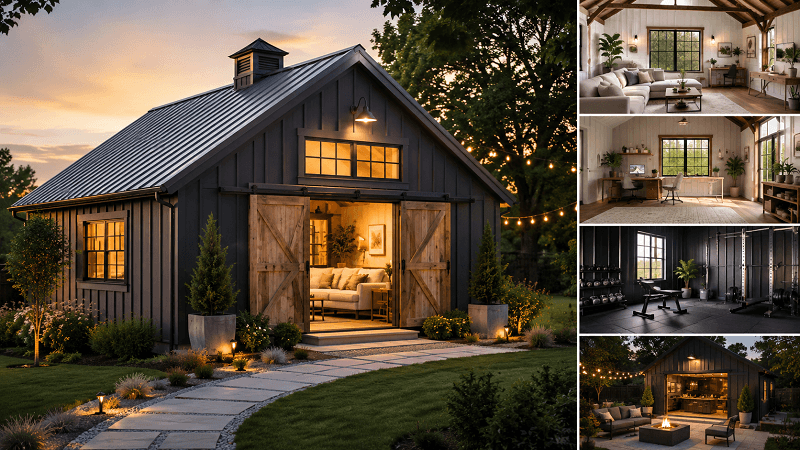
When most people picture a barn, they imagine hay bales, livestock, and open countryside. But the reality in today’s world looks a lot different. Across suburban neighborhoods and rural properties alike, small barns are being repurposed in creative and practical ways that have nothing to do with agriculture. In fact, barn sheds have become one of the most versatile structures a homeowner can invest in, offering a blend of rustic charm and functional square footage that traditional home additions simply can’t replicate. Whether you have a half-acre lot or twenty acres to work with, a small barn might be exactly what your property is missing.
The Shift Away From Traditional Barn Use
Over the past decade or so, there has been a noticeable cultural shift in how people think about rural-style structures. Blame it on the tiny home movement, the rise of remote work, or just the general desire for more usable space at home. Whatever the reason, small barns have found a second life far removed from their agricultural roots.
Part of what makes them so appealing is the structure itself. Barns are built to last. They’re typically constructed with heavy-duty framing, wide open interiors, and enough vertical space to get creative with lofts, storage, or high-ceiling rooms. That kind of bones is hard to find in a pre-built shed or a standard room addition. Pair that with the aesthetic appeal of a barn-style exterior and you’ve got something that adds character to a property while actually serving a purpose.
A Home Office That Doesn’t Feel Like a Closet
Remote work changed everything for a lot of people, and not always in a comfortable way. Dining room tables turned into desks, bedrooms became conference call backdrops, and spare rooms were converted into makeshift offices with varying degrees of success.
A small barn solves that problem cleanly. With enough square footage to set up a proper desk, bookshelf, seating area, and even a small meeting table, a barn office gives you physical separation from your home without requiring a commute. That psychological distance between your living space and your workspace is genuinely valuable for productivity and mental health.
With proper insulation, electrical work, and a mini-split heating and cooling system, a small barn can function as a fully climate-controlled office year-round. Add a few windows, run an internet connection out to it, and you’ve got a professional workspace that most dedicated home offices can’t match.
An Art Studio or Creative Workshop
Natural light. Open floor plans. High ceilings. These are the things artists and makers dream about, and they’re built right into most barn designs.
Painters, sculptors, potters, woodworkers, and other creatives have been converting small barns into studios for years. The wide-open interior is perfect for spreading out large canvases, running long woodworking tables, or setting up a pottery wheel with room to move. The loft space common in many barn designs works well for storage, drying finished pieces, or even a small gallery area.
One underrated benefit of using a barn as a workshop is the lack of worry about mess. You’re not protecting hardwood floors or keeping sawdust away from your living room carpet. You can do the kind of work that actually requires space and generates chaos without it affecting your home.
A Home Gym That You’ll Actually Use
Gym memberships are expensive and easy to skip. Home gyms set up in basements or spare bedrooms tend to feel cramped and uninviting. A small barn changes that equation entirely.
With an open interior of even 12×20 feet, you have more than enough room for a squat rack, a bench, free weights, a cardio machine, and some floor space for stretching or bodyweight work. The high ceilings common in barn designs mean you won’t be ducking under beams during overhead presses. And because the space is separate from your house, it genuinely feels like going somewhere to work out, which makes it easier to build a consistent routine.
Rubber flooring, a wall-mounted mirror, some proper lighting, and climate control are really all you need to turn a small barn into a gym that rivals commercial spaces.
A Guesthouse or Short-Term Rental
This is where things get really interesting from a financial standpoint. A small barn with a loft, a bathroom, and a kitchenette can function as a surprisingly comfortable guesthouse. Families with older parents, adult children returning home, or frequent out-of-town visitors know how valuable it is to have dedicated guest space that doesn’t disrupt the main household.
Some homeowners have taken this a step further by listing converted barn spaces on short-term rental platforms. The rustic aesthetic is genuinely popular with travelers looking for something different from a standard hotel room or apartment rental. Done right, a converted barn guesthouse can pay for itself over time.
It’s worth noting that adding any kind of living space comes with permitting requirements and local code considerations. Always check with your municipality before moving forward with a bathroom, kitchen plumbing, or anything that would classify the structure as a living unit.
A Dedicated Kids’ Play Space
As children get older, their need for dedicated play space grows. Trampolines, climbing structures, craft tables, game setups, and general chaos tend to take over living rooms and backyards alike. A small barn gives kids a place of their own.
Parents love it because it keeps the mess contained. Kids love it because it feels like their own world. A barn playroom can evolve over time too. What starts as a space for toys and crafts can transition into a hangout room for teenagers and eventually a studio or workshop as the kids grow up. It’s a structure that grows with the family.
Storage Done Right
Standard sheds have their place, but they tend to fill up fast. A small barn offers significantly more space and, importantly, more vertical space. The loft area in many barn designs is ideal for storing seasonal items, camping gear, holiday decorations, lawn equipment, and anything else that clutters up a garage.
Unlike a cramped utility shed where everything ends up piled on top of everything else, a barn gives you room to actually organize. You can install shelving systems, hang tools, park a riding mower on the ground floor, and still have room to move around.
Event and Entertainment Space
Barn venues are wildly popular for weddings, parties, and gatherings. While a small backyard barn isn’t going to host a 200-person wedding, it can absolutely serve as a covered outdoor entertainment space for family gatherings, birthday parties, or casual weekend get-togethers.
String some lights, set up a bar cart, throw down some outdoor rugs, and you’ve got a party space with a lot more personality than a backyard tent. The structure provides protection from the sun and light rain while still feeling open and relaxed.
The Value Behind the Structure
One thing that often surprises homeowners is how much a well-placed, well-built small barn can contribute to property value. Buyers looking at a home with a versatile outbuilding see options. They see a potential studio, office, workshop, or storage solution. That perceived value translates to real dollars when it comes time to sell.
Beyond resale, there’s the day-to-day quality-of-life value that’s harder to put a number on. Having dedicated space for work, hobbies, guests, or storage makes a property genuinely more functional. It reduces clutter in the main home, creates room for the things you actually want to do, and adds a visual element to the landscape that flat, open yards simply don’t have.
Final Thoughts
The image of a barn as purely a farming structure is outdated. Today’s small barns are showing up in suburban backyards and rural retreats alike, serving as offices, gyms, studios, guesthouses, and gathering spaces. They’re built to last, easy to customize, and far more adaptable than most homeowners initially realize.
If you’ve been thinking about adding more usable space to your property without the expense and disruption of a full home addition, a small barn is genuinely worth exploring. The flexibility alone makes it one of the most practical investments a homeowner can make.