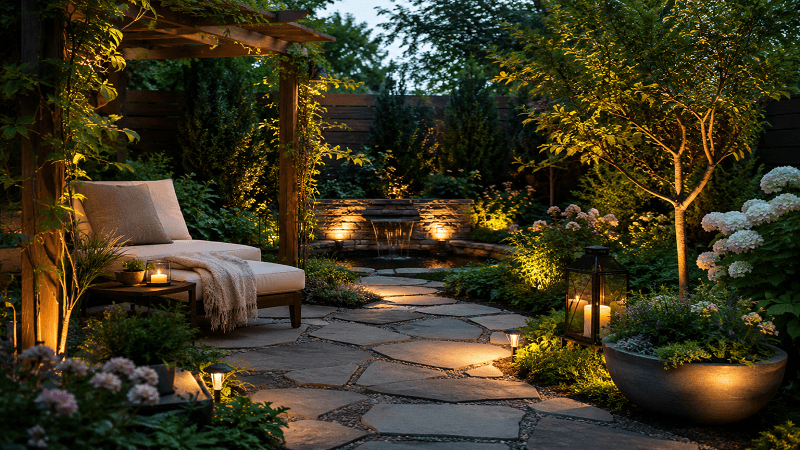
A genuinely private garden is one of the most underrated features a residential property can have. The outdoor space that functions as a true retreat, somewhere a household can relax, entertain, and recover without awareness of being observed, does not happen automatically. It requires deliberate design. Even the most beautifully planted garden fails to deliver full relaxation if every outdoor moment is spent with a background awareness of being visible to neighbours or overlooked from nearby windows. This guide addresses both the privacy elements that make an outdoor space genuinely secluded and the functional features that make a private garden worth spending time in once the seclusion is established.
Establishing Genuine Privacy First
Before any feature can be enjoyed properly, the garden needs to feel genuinely enclosed. The starting point is an honest assessment of where sightlines exist: from neighbouring properties, from upper windows, and from any elevated ground overlooking the space. Most urban and suburban gardens have at least one or two angles from which they are visible, and designing for privacy means addressing each of these deliberately rather than hoping that general planting will eventually fill the gaps.
Vertical structure provides the most reliable enclosure. Mature evergreen planting along boundary lines, including species such as yew, hornbeam, or western red cedar hedging, creates dense year-round screening that improves with age. Unlike fencing, well-established hedging is nearly impossible to see through and creates an acoustic buffer as well as a visual one. The time to establishment is the main disadvantage, but planting at appropriate density with species suited to the soil and local conditions produces effective results within a manageable timeframe.
Pergolas and covered structures address the overhead privacy that boundary planting cannot provide. An open pergola creates partial enclosure, but one fitted with a pitched roof frame and combined with climbing plants or weatherproof panels on the sides creates a covered outdoor room that feels genuinely separate from the surrounding landscape. The psychological effect of an overhead structure on the outdoor experience is significant: even a partially covered area feels more intimate and sheltered than an entirely open one.
Screens and panels supplement larger structural planting to address specific sightlines that mature hedging has not yet blocked. Timber panels with climbing plants trained across them, bamboo screening on posts, and architectural metal screens all offer different aesthetics and suit different garden styles. The practical difference between a garden that is fully private and one that still has one or two exposed angles is the difference between genuine relaxation and a persistent awareness of being visible.
Features That Make a Private Garden Worth Being In
Once the enclosure is established, the features inside the space determine how it is actually used. Gardens that are private but functionally empty will be visited occasionally for fresh air and then abandoned. Gardens that offer something to engage with, a place to sit in genuine comfort, a source of warmth that extends the season, a sensory environment distinct from the interior of the home, become places the household returns to consistently.
Outdoor seating designed for extended stays rather than occasional visits is the foundation. This means weather-appropriate materials, sufficient cushioning depth, and a position that takes advantage of the garden’s best aspect while remaining within the enclosed area. Many garden seating areas are positioned where it was convenient to place them rather than where it is best to sit, and repositioning furniture to optimise aspect, wind shelter, and views of focal features often transforms how regularly the space is used.
Lighting extends the usable hours of an outdoor space dramatically, particularly during autumn and winter when natural daylight is limited. String lights, lanterns, pathway lighting, and accent lighting around key features all contribute to an atmosphere that is inviting after dark. Garden lighting design should generally prioritise warmth and mood over utility: enough illumination to move safely through the space, but enough restraint to preserve the character of being in an outdoor environment rather than an indoor one.
Water features add an acoustic dimension that changes the character of a garden significantly. Running water masks ambient noise from traffic and neighbours, creating a background sound that is relaxing in itself while reducing the sense that the garden is permeable to the surrounding environment. For gardens in urban or suburban locations, this acoustic quality can be as valuable as the visual screening provided by planting and structures.
Wood Fired Hot Tubs as Garden Focal Points
Wood Fired Hot tubs are one of the most effective ways to convert a private garden from a space that is pleasant to look at into a destination the household returns to regularly. The combination of warmth, immersion, and the natural atmosphere of a wood fire creates an experience with a different quality from simply sitting on a terrace or beneath a pergola, and it extends the useful season of the garden significantly. Many owners find that cooler autumn and winter evenings are among the most enjoyable times to use the tub, with the contrast between the heated water and the cool night air forming a central part of the appeal.
The wood-fired heating system is an important part of the attraction for many buyers. There is no electrical connection required, which gives significantly more flexibility in terms of where the tub can be positioned within the garden and removes the visual intrusion of cable management across a space designed around natural materials. The stove becomes part of the ritual of use: lighting the fire, monitoring the water temperature as it builds, and settling in once the heat has reached the right point provides a focused, deliberate quality that differentiates the experience from activating a thermostatically controlled electric spa.
Timber construction integrates naturally into garden environments that use natural materials elsewhere. A wooden hot tub positioned within a landscaped garden with structural planting, timber decking, and sympathetic screening carries a material consistency that most buyers find far more appealing than acrylic or fibreglass alternatives in the same setting. The natural weathering of the timber over time adds to rather than detracts from this quality.
Combining Hot Tubs with Other Garden Wellness Features
A private garden with a wood fired hot tub as a centrepiece naturally invites complementary additions. A covered sitting area adjacent to the tub provides somewhere to cool down and rest between soaks without returning indoors. A dedicated changing area, which can be as simple as a small garden room with a privacy screen, adds to the self-contained quality of the outdoor wellness experience.
Some homeowners integrate a garden sauna cabin into the same space, creating a complete thermal wellness environment that can be used independently or in combination. The practice of alternating between sauna heat and hot tub immersion, with periods of cooling in the open air between sessions, draws on Nordic wellness traditions that have been practised for centuries and which continue to attract growing interest in the UK. A private garden is the ideal environment for this kind of practice precisely because privacy allows full relaxation in a way that commercial or communal facilities cannot replicate.
Frequently Asked Questions
Does a wood fired hot tub require any external power supply?
No. A wood fired hot tub is heated entirely by the wood stove integrated into or attached to the vessel. No electrical connection is required, which gives considerably more flexibility in positioning within a garden and removes the need for cable infrastructure across the outdoor space.
How long does it take to heat a wood fired hot tub?
Heating time depends on the water volume, the stove specification, and the ambient temperature. A well-designed stove in typical conditions brings a medium-sized tub to a comfortable soaking temperature within approximately two to four hours.
Does a garden hot tub require planning permission?
In most cases, a freestanding outdoor hot tub does not require planning permission in the UK. Properties in conservation areas or those where fixed permanent structures are involved should verify requirements with the local planning authority before proceeding.
How should a wood fired hot tub be integrated into a garden design?
Position is important for both practical and aesthetic reasons. The tub should sit on a level, load-bearing surface, within reach of a water source, and positioned to take advantage of the garden’s best aspect while remaining within the enclosed private area. Surrounding planting, decking, and lighting all contribute to how well the tub integrates visually and how enjoyable the space around it is to spend time in.
Can a garden hot tub be used year-round?
Yes. Wood fired hot tubs are popular specifically because they perform well in cold weather, and many owners find winter sessions among the most enjoyable. The stove provides both water heating and ambient warmth in the surrounding area, making outdoor use comfortable even in low temperatures.