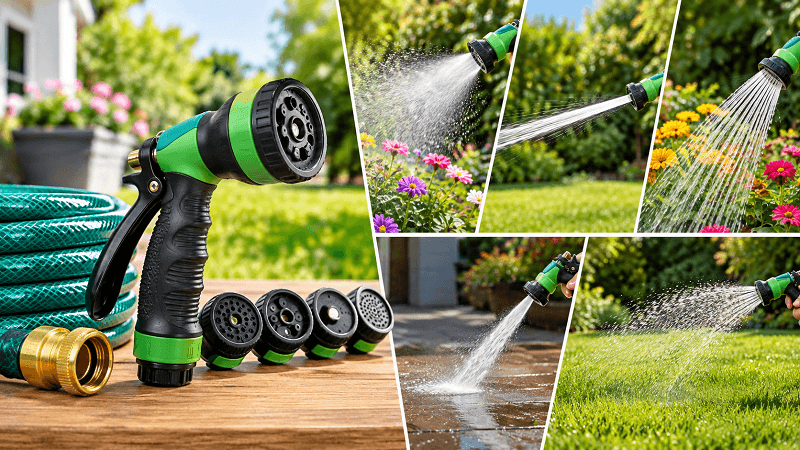
Picking the right garden tool can make yard work faster and much less tiring. A good water flow control setup, the right spray pattern, and a comfortable grip all matter more than most people expect. This guide covers the main types of nozzles, how they differ, and how to match one to your outdoor tasks, from watering flowers to washing a car. You will also find a simple comparison table, a short case study, and answers to common questions so you can pick with confidence. Whether you care for a small patio garden or a large lawn, the right hose sprayer choice saves both water and effort.
Key Takeaways
- Match the spray pattern to the task rather than using one setting for everything.
- Metal or zinc alloy nozzles last longer than plastic under regular outdoor use.
- Flow control features help lower water waste without changing your watering routine.
- A locking trigger reduces hand strain during longer cleaning jobs.
- Checking the hose connection for leaks is just as important as the nozzle itself.
Why the Right Nozzle Matters More Than You Think
Many people grab the first spray attachment they see at the store, then wonder why watering the garden feels like a chore. A poor quality nozzle can leak at the connection, jam mid spray, or offer only one weak stream that cannot handle both gentle watering and tougher cleaning jobs. Over time, this wastes water and adds frustration to a simple task.
A study from the Environmental Protection Agency notes that outdoor water use makes up close to 30 percent of household water use in the United States, and even more in drier regions. Choosing equipment that controls flow properly, rather than letting water run out at full force for every task, is one of the easiest ways to cut down on that number without changing your daily habits.
Main Types of Garden Hose Nozzles
There are a few common styles you will run into while shopping, and each one fits certain jobs better than others.
Basic Fan Spray Nozzles
These are simple, low cost nozzles that produce one wide, flat spray. They work well for light watering of flower beds but do not offer much beyond a single setting.
Adjustable Pattern Nozzles
This is the most popular style for home gardeners. A rotating dial or thumb switch lets you move between settings such as mist, shower, jet, cone, and flat spray. This kind of grid garden hose nozzle setup is a strong pick for anyone who wants one tool to handle watering, rinsing, and light cleaning without switching attachments.
High Pressure Nozzles
Built for tougher outdoor jobs, these nozzles focus on producing strong, concentrated water pressure for tasks such as removing caked on dirt from a patio, rinsing mud off a car, or clearing debris from a driveway. A high pressure hose nozzle with metal construction tends to last longer under repeated heavy use than plastic versions, since the added pressure puts more strain on the housing and trigger mechanism.
Watering Wands
These are longer nozzles, often 15 to 36 inches, made for reaching hanging baskets or plants at the back of a flower bed without bending down. Many combine several spray patterns with the extended reach.
Comparing Nozzle Types at a Glance
| Nozzle Type | Best For | Typical Spray Patterns | Build Material |
| Fan Spray | Light watering | 1 setting | Plastic |
| Adjustable Pattern | General yard tasks | 6 to 9 settings | Metal or zinc alloy |
| High Pressure | Cleaning patios, cars, driveways | 1 to 3 focused settings | Metal, brass, or zinc alloy |
| Watering Wand | Hanging baskets, tall plants | 5 to 7 settings | Metal with extended handle |
Key Features to Look For
Before buying a nozzle, it helps to check a few details that affect how well it performs over time.
- Build material. Metal and zinc alloy bodies resist cracking and last through more seasons than plastic ones.
- Number of spray patterns. More patterns mean fewer tools cluttering your shed, since one nozzle can cover watering, misting, and rinsing.
- Grip comfort. A trigger with a soft, non slip coating reduces hand fatigue during longer watering sessions.
- Leak resistance. Rubber gasket seals at the hose connection point stop drips and wasted water.
- Lock feature. A locking trigger lets you keep water flowing without holding the handle the entire time, which is useful for longer cleaning jobs.
How to Match a Nozzle to Your Task
Different jobs call for different settings, and knowing which pattern suits which task saves both time and water.
- Watering seedlings or flower beds: Use a mist or shower setting so the water does not disturb soil or damage young plants.
- Watering lawns or larger garden areas: A wider shower or full pattern covers more ground with each pass.
- Washing a car or bike: A cone or jet setting removes dirt without needing extra soap and scrubbing.
- Cleaning a patio or driveway: A focused jet setting from a high pressure nozzle breaks up dirt and grime that a gentle spray cannot touch.
- Rinsing off pets: A soft shower setting is more comfortable for animals than a strong jet stream.
A Short Case Study: Cutting Outdoor Water Waste
A community garden project in the Pacific Northwest tracked its water bills after switching every plot from basic fan spray attachments to adjustable pattern nozzles with flow control knobs. Over one growing season, the group reported a noticeable drop in water use, largely because gardeners could match the spray strength to each plant type instead of running full flow water for every task. Smaller, more precise streams for seedlings meant less runoff, while the same nozzles handled heavier cleaning duties when needed.
This kind of result lines up with wider water conservation research, which consistently points to flow control as one of the simplest changes a household or community group can make without buying expensive irrigation systems.
Common Mistakes to Avoid
- Using full pressure on delicate plants. This can damage stems, leaves, and soil structure.
- Ignoring the hose connection. A loose or worn washer at the nozzle base wastes water through leaks, even if the nozzle itself works fine.
- Choosing based on price alone. A cheap plastic nozzle that cracks after one season often costs more over time than a durable metal option.
- Skipping the lock feature. Holding a trigger down for long cleaning jobs adds unneeded hand strain when a lock switch would do the job.
Frequently Asked Questions
What is the best nozzle setting for watering vegetables?
A gentle shower or mist setting works best, since it spreads water evenly without washing away soil or damaging young plants.
Can I use a high pressure nozzle on my car?
Yes, but a moderate jet or cone setting is usually enough. Full pressure at close range can chip paint or damage trim on some vehicles.
How often should I replace my garden hose nozzle?
A quality metal nozzle can last several years with normal care. Replace it sooner if the trigger sticks, the seal leaks, or the spray patterns stop switching cleanly.
Do adjustable nozzles waste more water than single pattern ones?
No. In fact, adjustable nozzles often use less water overall, since you can match the flow to the task instead of running full pressure for every job.
Is a metal nozzle worth the extra cost compared to plastic?
For most households, yes. Metal and zinc alloy bodies handle drops, temperature changes, and daily use better than plastic, which tends to crack over time.
Conclusion:
Choosing the right nozzle comes down to matching the tool to the task, not grabbing whatever is within reach. An adjustable pattern nozzle covers most everyday jobs, while a high pressure option handles tougher cleaning work. A little care in choosing build material and spray settings now means less wasted water and a tool that holds up season after season.
Taking a few minutes to pick the right nozzle for your yard, patio, or car washing needs pays off through less wasted water, less strain on your hands, and a tool that holds up season after season.