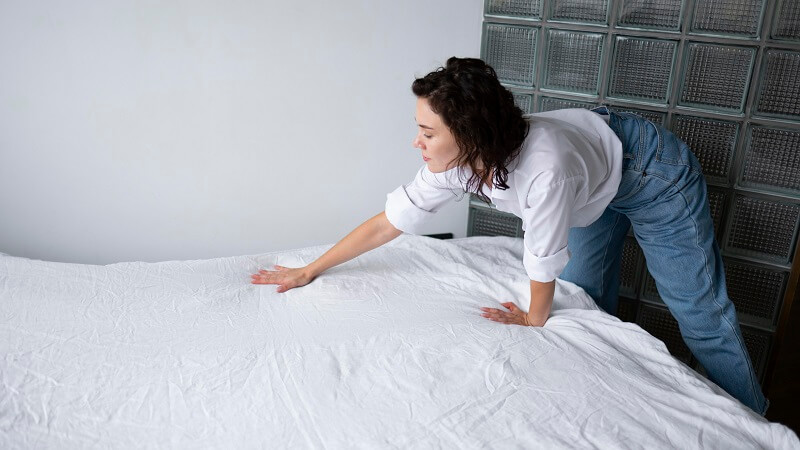
Most people replace their car, their phone and even their mattress topper more often than they replace the mattress itself. Yet a mattress works harder than almost anything else in the house, absorbing roughly a third of a person’s life in direct, sustained contact. When it starts failing, the failure is usually gradual enough that nobody notices until the aches become routine.
The warning signs most people ignore
Sagging is the obvious tell, a visible dip where a body has slept for years, but it’s rarely the first sign. Waking up with stiffness that fades within twenty minutes of moving around is a much earlier signal that the mattress has stopped supporting the spine properly overnight. So is a mattress that used to feel cool and now traps heat, since materials that once wicked away warmth compress and lose that property over time.
Age matters more than most people assume. Even a well-maintained mattress has a functional lifespan, typically somewhere between seven and ten years depending on materials and quality, after which support and pressure relief degrade even without visible sagging. A mattress that’s approaching or past that window is worth evaluating honestly, rather than assuming it’s fine simply because it still looks intact.
Why mattress type matters more than most people realize
Not all mattresses fail, or perform, the same way. All-foam mattresses contour closely to the body but can retain heat and sometimes lack the bounce and edge support some sleepers want. Traditional innerspring mattresses offer support and airflow but often lack the pressure relief that side sleepers and people with joint pain need. Hybrid mattresses exist specifically to solve the trade-off between those two approaches, combining a coil support system with a foam or performance-material comfort layer on top.
The quality of that combination varies enormously between brands, which is where a lot of buyers get frustrated after an online purchase that didn’t live up to the marketing. A genuinely well-built hybrid isn’t just foam stacked on springs, it’s an engineered system where each layer does a specific job: a support base, a pressure-relieving middle layer, a responsive top layer, and reinforced edges that stop the mattress from feeling like it’s collapsing when someone sits on the side.
What actually makes a hybrid mattress different
The double-pocketed coil systems used in higher-end hybrids allow far more airflow than a solid foam block, which is why they sleep noticeably cooler than all-foam alternatives, particularly for people who run hot at night or share a bed with someone who does. Motion isolation is another underrated factor: pocketed coils flex independently, so movement on one side of the bed doesn’t ripple across to wake a partner, which solid innerspring systems handle far worse.
For anyone shopping this category seriously, it’s worth looking specifically at what’s marketed as a luxury hybrid mattress, since that tier typically uses higher density foams, reinforced perimeter coils for real edge support, and breathable, often organic, cover materials rather than the synthetic barriers found in budget hybrids. The difference shows up most clearly after a year or two of use, when a cheaper hybrid has already started developing body impressions and a well-built one hasn’t.
Matching mattress type to sleep position and body type
Side sleepers generally need more cushioning at the shoulders and hips to keep the spine aligned, which makes a responsive comfort layer particularly important for that group. Back and stomach sleepers usually need firmer, more even support to avoid the lower back sinking out of alignment. Couples with different preferences, one person wanting firm support and the other wanting a plush feel, are exactly the situation a well-engineered hybrid is built to solve, since the coil and foam layers can deliver a single feel that adapts to different weights and positions rather than forcing a compromise.
Chronic back or joint pain adds another layer to the decision. A mattress that redistributes pressure evenly, rather than creating concentrated pressure points at the hips and shoulders, tends to produce a measurable reduction in morning stiffness within the first few weeks of use, which is one of the most commonly reported benefits among people who switch from an aging mattress to a properly built hybrid.
The sleep trial and warranty question
Because a mattress is such a personal, high-stakes purchase, the trial period and warranty terms matter almost as much as the construction itself. A trial of 100 nights or more gives a sleeper’s body genuine time to adjust, since the first week or two on a new mattress often feels different from how it settles in afterward. A meaningful warranty, ideally a decade or longer, also signals how confident a manufacturer actually is in their own materials holding up rather than breaking down within a couple of years.
Making the switch without the overwhelm
The mistake most people make is waiting until the old mattress is clearly unusable before starting to look, which usually means a rushed decision made from a place of discomfort rather than research. Starting the process a few months before the old mattress reaches its likely end of life, understanding sleep position and any pain points honestly, and prioritizing trial length and construction quality over marketing claims tends to produce a far better outcome than an impulse purchase during a sale.
FAQ
How do I know if my mattress is actually the cause of my back pain?
If stiffness or aches are worst first thing in the morning and ease within twenty to thirty minutes of moving around, the mattress is a likely contributor, since it points to poor support or alignment overnight rather than an unrelated condition.
What’s the real difference between memory foam and hybrid mattresses?
Memory foam contours closely but can retain heat and lacks the bounce and edge support some sleepers prefer. A hybrid combines a coil support system with a foam or performance comfort layer, generally offering better airflow, edge support and motion isolation.
How long should a good hybrid mattress last?
With proper care, a well-built hybrid mattress typically lasts eight to ten years before support and comfort noticeably degrade, though cheaper constructions often show body impressions and sagging well before that point.
Is a firmer or softer mattress better for back pain?
Neither extreme is universally correct. What matters most is even pressure distribution and spinal alignment, which is why medium-firm hybrids with zoned support tend to work well across a wide range of body types and sleep positions.
Do I need a special bed frame for a hybrid mattress?
Most hybrid mattresses work on any solid, supportive surface, including platform beds, adjustable bases, and slatted frames, as long as the slats are spaced closely enough to avoid gaps that could affect support.
Is it worth paying more for a luxury hybrid mattress over a budget option?
Generally yes, if the price difference reflects genuinely higher density foams, better coil engineering and reinforced edge support, since those are the components most likely to fail early in cheaper constructions.