Furniture should do more than fill a room. In Salt Lake City, Utah, a well-planned home can make daily routines easier, whether that means creating a welcoming entry for winter layers, a calm place to unwind after work, or a flexible living area for family and friends. Browsing home decor stores in Salt Lake City for stylish accessories can help complete a room, but the best results start with furniture that fits the space and the people using it.
Comfort, movement, storage, maintenance, and long-term needs deserve as much attention as color and style. Before purchasing a sofa, dining set, bed, or desk, consider how the room needs to work on an ordinary weekday, not only how it will look when newly arranged.
Why Furniture Matters More Than Appearance
A room can look polished and still feel inconvenient. A beautiful coffee table may interrupt the path between the sofa and the kitchen. A deep chair may not support every member of the household. Furniture influences where people rest, eat, work, sleep, store belongings, and gather, so function should lead the decision-making process. Style is most successful when it supports real life instead of competing with it.
Start With Daily Life
Before shopping, make a short list of who uses the room and what happens there. A family room may need seating for movie nights, hidden storage for blankets, and durable upholstery for pets. A dining area might serve weekday meals, homework, and larger weekend gatherings. A home office needs a work surface, a supportive chair, dependable lighting, and space for supplies.
- Identify the room’s primary users.
- List its most frequent activities.
- Note pets, children, guests, clutter, and cleaning habits.
- Decide whether the room must handle more than one purpose.
Measure Before Buying
Measure the room before falling in love with a piece. Record wall lengths, ceiling height, windows, doors, vents, outlets, radiators, and built-in storage. Then measure doors, hallways, staircases, elevators, and tight corners along the delivery route. A cabinet can fit on paper, yet still be difficult to bring inside.
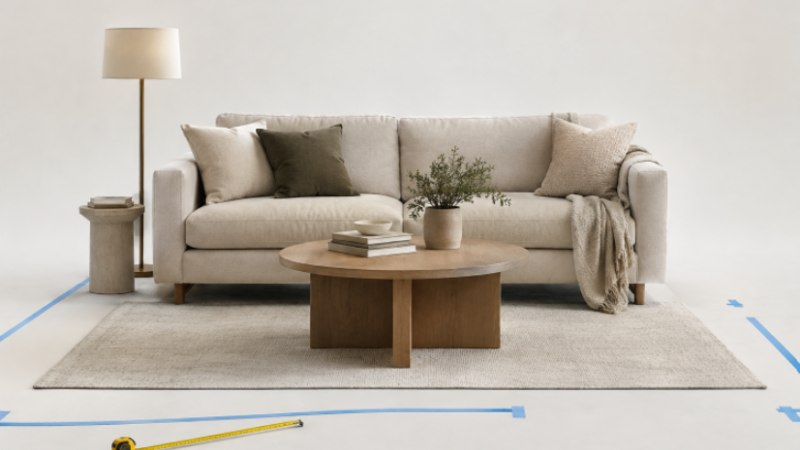
Use painter’s tape to mark a furniture footprint on the floor. This simple test reveals whether a sofa crowds a walkway, a bed leaves room for nightstands, or a dining table allows chairs to pull out. Also account for door swings, drawer clearance, and the space needed by recliners.
Plan Clear Room Flow
Begin with the largest item, such as the bed, sofa, dining table, or desk. Place it according to the room’s focal point and the most natural path through the space. Keep major routes open so people are not forced to squeeze between furniture or circle around obstacles.
In open-plan Salt Lake City homes and apartments, define areas without building visual walls. A rug can anchor a seating group, a console can create a gentle boundary for entry, and a thoughtfully placed bookcase can separate zones while preserving openness. Avoid automatically pushing every item against a wall if floating a sofa improves conversation and traffic flow.
Choose Comfort and Support
Comfort is personal, so test seating whenever possible. Sit for several minutes and pay attention to seat height, depth, cushion firmness, back angle, arm height, and lumbar support. A very soft sofa may feel appealing at first, but may not provide the support some users prefer for reading, conversation, or standing up.
Consider the people who will use the furniture most. Shorter adults may need a shallower seat, while taller adults may benefit from deeper seating and higher backs. For desks, prioritize adjustability, chair support, and monitor placement over finish or color.
Select Practical Materials
Choose materials according to the household’s actual wear and maintenance tolerance. Wood can bring warmth and may be repairable, although finishes vary in their resistance to moisture and scratches. Metal is durable and can make a room feel visually lighter. Glass reflects light but shows fingerprints quickly. Leather requires appropriate care, while performance fabrics can be practical for frequent use.
Read cleaning instructions, warranty terms, fabric codes, and replacement-part policies before buying. A material is only practical if its care routine fits your schedule.
Support Health and Wellness
Room planning also affects light, sound, temperature, and air movement. Keep supply and return vents clear, avoid blocking windows with oversized pieces, and consider glare when placing desks or televisions. The Environmental Protection Agency notes that furnishings and ventilation can affect indoor air quality, so it is sensible to support better indoor air with source control and adequate ventilation when selecting and arranging furnishings.
For busy homes, easy-clean surfaces can simplify routine care. In bedrooms and work areas, use lighting that suits the task and leave enough open space to prevent the room from feeling cramped.
Design for Changing Needs
A flexible room can remain useful as routines change. Modular seating, movable side tables, storage benches, and nesting tables can adapt to guests, hobbies, remote work, new pets, or a growing family. Keep frequently used items within easy reach, and avoid narrow routes or sharp-cornered pieces where safety is a concern.
Planning with accessibility in mind is not limited to one age group. Clear pathways, stable seating, usable storage, and practical reach ranges can make a home more comfortable now and easier to adapt later.
Build a Realistic Budget
Separate essential purchases from decorative upgrades. Allocate more of the budget to high-use items, including mattresses, sofas, dining chairs, and desk chairs. Include delivery, assembly, installation, floor protection, and care supplies when comparing prices. Accent pillows, lamps, and small side tables are generally easier to replace as tastes change.
Use a Furniture Buying Checklist
- Fit: Does it fit the room and delivery route?
- Function: Does it solve a daily need?
- Comfort: Will the main users enjoy it?
- Durability: Can it handle expected wear?
- Care: Is the cleaning routine realistic?
- Flexibility: Can it adapt if the room changes?
- Value: Does the quality justify the total cost?
Common Questions
Should Furniture Match in Every Room?
No. Rooms can feel connected through repeated wood tones, metal finishes, color families, or shapes without relying on identical furniture sets.
How Much Furniture Is Too Much?
If doors, drawers, chairs, and walking paths cannot operate comfortably, the room has too much furniture, even if every piece technically fits.
What Should Be Bought First?
Start with the pieces that make the room usable, such as a bed, sofa, dining surface, desk, or storage unit. Add decorative layers after the layout proves successful.
Conclusion
The strongest furniture choices make a Salt Lake City home easier to live in every day. Measure carefully, protect clear pathways, choose supportive proportions, select realistic materials, and leave room for life to change. When comfort and function come first, a home can look personal, feel welcoming, and continue serving its household well.