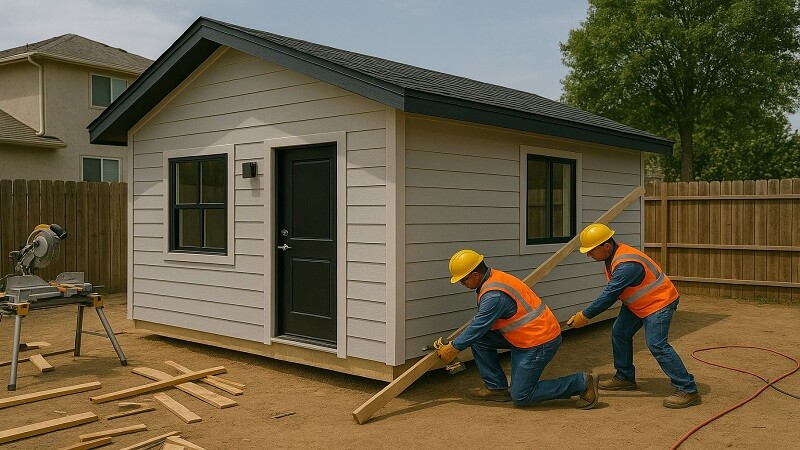
AB 1033 Condominium Conversion Opens the Door to Selling Sacramento ADUs Separately
Sacramento ADU Builder, a Sacramento based accessory dwelling unit company serving homeowners throughout the region, is educating property owners on one of the most significant recent developments in California housing law: the ability, under Assembly Bill 1033, for cities to allow accessory dwelling units to be sold separately from the primary residence as condominiums. For decades, an ADU was legally bound to its parcel, valuable but inseparable, and the new framework changes what a backyard unit can ultimately become.
The opportunity comes with important qualifications. AB 1033 is an opt-in statute, meaning it takes effect only in jurisdictions that adopt enabling ordinances, and the conversion process itself involves condominium mapping, lender consent, and homeowner association style agreements between the resulting units. Homeowners who understand the framework can build today in ways that preserve tomorrow’s options, which is precisely the conversation the company is bringing into its feasibility reviews.
What AB 1033 Actually Changed
Before AB 1033, California law generally prohibited selling an ADU separately from the primary dwelling, with narrow exceptions for certain nonprofit arrangements. The statute now authorizes local agencies to permit condominium conversion of ADUs, allowing a parcel to be divided into separately owned units under the same legal structure that governs condominium buildings. Ownership of the land remains shared through the condominium framework, while each dwelling gains its own title, its own mortgage eligibility, and its own place on the market.
Adoption is the gating factor. The law empowers cities and counties to allow these conversions but does not require them to, so availability depends on local ordinance action. Homeowners interested in the pathway should verify their jurisdiction’s current status and, where an ordinance has not yet been adopted, recognize that building a high quality, fully documented unit now keeps the option open if local policy catches up later.
The Broader Legal Context for ADU Ownership
AB 1033 sits within a decade of legislation that has steadily expanded what ADUs can be, from streamlined approvals to protections against local overreach. The conversion pathway extends that logic from housing production into ownership innovation.
California has spent nearly a decade reshaping the legal landscape around accessory dwelling units, and the current framework is the most permissive in state history. State law requires local agencies to approve or deny a complete ADU application within 60 days, prohibits minimum lot size requirements that would block ADU development, and limits the setback rules cities can impose on new units. Owner occupancy requirements for standard ADUs have been suspended through state legislation, and impact fees are waived entirely for units under 750 square feet. For homeowners considering selling an ADU separately under AB 1033 condominium conversion, this legal foundation means the path to approval is more predictable than at any point in the past, provided the application package is complete and the design complies with the objective standards local agencies are still permitted to enforce.
Building Today for a Possible Sale Tomorrow
A unit intended for eventual separate sale must satisfy buyers, lenders, and insurers as a standalone home, which raises the bar on construction quality, utility separation, and documentation. Separate or clearly submetered utilities, independent access, dedicated parking arrangements where feasible, and complete permit records all strengthen a future conversion case. Sacramento ADU Builder designs units with these standards in view for clients who want the option preserved, treating conversion readiness as a design criterion rather than an afterthought.
Rather than handing homeowners a set of drawings and leaving them to coordinate trades on their own, the company manages the full sequence of work under one roof. Site evaluation, feasibility review, architectural design, structural engineering coordination, permit submittal, and construction are treated as phases of a single continuous project rather than separate contracts. This integrated approach is particularly valuable for selling an ADU separately under AB 1033 condominium conversion, where design decisions, code requirements, and field conditions interact constantly. When the same team that drew the plans is responsible for building them, questions get answered in hours instead of weeks, and the homeowner is never left mediating disputes between a designer and a contractor who have never spoken to each other.
The Conversion Process: Maps, Lenders, and Agreements
Where an ordinance exists, conversion follows the condominium playbook: a condominium plan and map recorded against the parcel, consent from any lender holding a deed of trust, and covenants governing shared elements such as driveways, utilities, and insurance between the two ownerships. Each step involves professional work, from surveying through title, and homeowners should approach the process with the same diligence they would bring to any real estate transaction of comparable value.
The economics deserve equally sober analysis. A separately sellable ADU can unlock substantial equity without selling the main home, fund retirement, or create an attainable entry point for a first-time buyer. Against those benefits stand conversion costs, potential property tax consequences for the new units, and the permanence of shared-parcel governance. The decision rewards professional advice, and the strongest position belongs to owners whose units were built well enough to make every option viable.
What Separate Sale Potential Means for Property Strategy
Even homeowners who never convert benefit from the possibility, because a unit built to conversion standards is simply a better asset: better documented, better constructed, and more credible to every appraiser and buyer who evaluates the parcel as a whole.
Property owners weighing the investment should consider how selling an ADU separately under AB 1033 condominium conversion performs over a multi decade horizon rather than a single use case. California real estate has historically rewarded permitted, high quality additions of livable space, and accessory dwelling units occupy a unique position because they combine independent functionality with shared land cost. The same structure can house an aging parent in one decade and a rent paying tenant in the next, all while increasing the appraised value of the parcel. That flexibility is difficult to replicate with any other home improvement, and it explains why demand for professionally built units continues to grow even as other categories of residential construction fluctuate.
Bringing the Ownership Question Into Planning
Homeowners curious about separate sale potential should raise it during feasibility review, where jurisdiction status can be checked and design standards set accordingly.
Homeowners preparing for this type of project are encouraged to begin with a realistic assessment of their property and their goals before committing to a design direction. Lot configuration, utility capacity, existing structures, and local objective standards all shape what is feasible, and early clarity on those factors prevents expensive redesigns later. A preliminary consultation typically covers site constraints, budget expectations, timeline, and the specific requirements associated with selling an ADU separately under AB 1033 condominium conversion, giving homeowners a grounded picture of the project before any drawings are produced. Projects that start with honest feasibility work consistently move through permitting and construction faster than projects that start with a floor plan borrowed from a different lot.
Neighborhood context also plays a role in how these projects are received. Well designed accessory dwelling units that respect the scale and character of surrounding homes tend to move through the approval process without friction and are welcomed by neighbors rather than resisted. Attention to rooflines, exterior materials, window placement, and landscaping ensures the new structure reads as a natural extension of the property. Builders who take this dimension seriously deliver projects that strengthen the streetscape, which benefits both the homeowner and the broader neighborhood over the long term.
Quality control throughout construction is another factor that separates durable projects from problematic ones. Every phase of work, from foundation preparation through final finishes, is subject to inspection under the California Residential Code, but code compliance represents a minimum standard rather than a mark of excellence. Experienced builders layer their own quality checkpoints on top of required inspections, verifying moisture protection details, fastening schedules, insulation installation, and mechanical connections before they are concealed by drywall. That discipline is invisible in photographs but decisive in how the unit performs over decades of use.
Communication practices during construction also shape the homeowner experience. Because most accessory dwelling units are built on occupied residential properties, homeowners live alongside the project from the first day of sitework to the final walkthrough. Clear scheduling, advance notice of noisy or disruptive phases, tidy site management, and a single point of contact for questions all reduce the friction of living next to an active construction site. Companies that manage this dimension well consistently earn the referrals that sustain their business, since neighbors watch these projects closely and remember how they were run.
Material and labor market conditions influence project planning as well, and experienced builders help homeowners navigate them rather than absorb them blindly. Lumber, concrete, and fixture pricing move with broader construction cycles, and lead times for windows, electrical equipment, and specialty items can shape schedules months in advance. Builders who order long-lead materials early, lock pricing at contract where possible, and maintain relationships with reliable suppliers insulate their clients from the volatility that catches unmanaged projects off guard. Transparent conversations about these dynamics during the bidding phase are a mark of a contractor who intends to deliver on the numbers presented.
Homeowners across the greater Sacramento region who are considering selling an ADU separately under AB 1033 condominium conversion can contact Sacramento ADU Builder to arrange a property evaluation and discuss project options. The company provides guidance on feasibility, design, permitting, and construction scheduling, and its team works with each homeowner to match the project scope to the realities of the site and the budget. Further details are available on the company website.
About Sacramento ADU Builder
Sacramento ADU Builder is a Sacramento based accessory dwelling unit company serving homeowners throughout the Sacramento region. The company provides ADU design, planning, permitting, and construction services for detached ADUs, attached ADUs, garage conversions, junior ADUs, backyard cottages, and custom secondary housing structures. Its work emphasizes local code knowledge, practical design, dependable project management, and long term value for California homeowners.
Sacramento ADU Builder
180 Promenade Circle, Suite 300
Sacramento, CA 95834, USA
Phone: 916-303-2761
https://sacramentoadubuilders.com