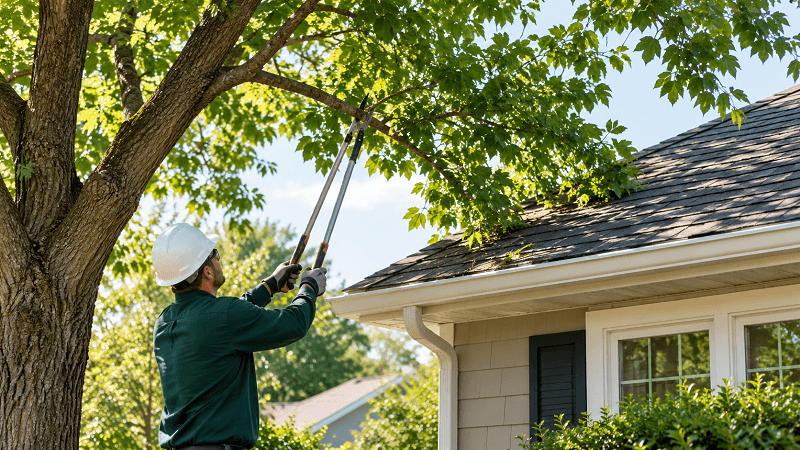
A healthy tree has one job, and that is to keep growing. It doesn’t care where the roof sits, how close the gutters are, where the driveway runs, or whether a power line or a neighbor’s fence happens to be in the way.
That steady growth is part of what makes trees so valuable around a home. They provide shade, beauty, and a sense of permanence, and they simply follow sunlight and open space, which sometimes leads them straight toward a roof.
Homeowners who search for a Tree Trimming and Removal Service Lafayette CO usually do so after a limb starts brushing the shingles or a canopy creeps over the gutters, when the tree’s plans and the house’s needs begin to overlap.
Branches Don’t Stop at the Roofline
Branches extend outward a little more every year, and over a decade or two that slow movement adds up. A limb that once cleared the roof by several feet can end up resting against it without anyone noticing the exact moment it happened.
Because the growth is so gradual, it rarely feels urgent. The tree looks perfectly healthy, and the branches seem to belong where they are, right up until wind or weight turns that closeness into rubbing, scraping, or damage.
Contact with a roof can wear down shingles and give moisture an easier way in. Keeping branches back from the structure is one of the simplest ways to avoid problems that develop slowly and quietly.
Shade Can Be Wonderful Until It Never Lets Anything Dry
Dense canopy provides welcome shade, but it also changes the conditions around a house. Roofs and walls that rarely see direct sun stay damp longer, and that persistent moisture can encourage problems nobody expected. Gutters often become the first casualty, since leaves and twigs collect quickly beneath an overhang.
Leaves and debris add to the trouble. They collect in gutters, pile up in valleys, and hold water against surfaces that were meant to drain freely, which can lead to blockages and slow, steady deterioration. Over several storm seasons, a thick canopy can keep a roof wet far longer than usual.
A canopy that overhangs the roof turns routine cleanup into a constant chore. Thinning or trimming it back lets sunlight and air reach surfaces that need them, helping the house dry out the way it was designed to do.
Healthy Looking Doesn’t Mean Risk Free
A tree can look full and green while hiding serious problems. Deadwood, weak unions where branches meet the trunk, and old storm damage are often hard to spot from the ground, especially in a thick, leafy canopy.
Structural imbalance matters too. A tree that has grown heavily toward one side can carry more stress than it appears to, and that stress shows up when strong wind or heavy snow puts extra load on the weak points.
Problems like these rarely announce themselves until something falls. A trained eye can notice warning signs that most homeowners would miss, which makes professional assessment valuable well before a branch ever comes down.
Good Tree Care Is Often About Keeping the Tree
Many people assume that a tree causing trouble has to come down. In reality, careful trimming, proper clearance, and attention to structure can often solve the problem while allowing the tree to remain a lasting part of the property.
Regular maintenance works best because it keeps small issues from growing into large ones. Removing deadwood, shaping the canopy, and keeping branches away from the house help the tree stay healthy and the home stay protected.
Removal becomes necessary only when a tree is severely damaged, diseased, or too risky to save. Good care aims to postpone that outcome as long as possible, preserving the benefits trees bring to a yard.
Conclusion
Trees have their own growth plan, and it doesn’t take the house into account. Homeowners have to make sure that plan stays compatible with the roof, the gutters, the driveway, and everything else nearby.
That means paying attention to how branches are changing, how much shade and moisture the canopy creates, and what might be hiding in a tree that looks perfectly healthy from the street. Seasonal checks make those changes much easier to spot.
Thoughtful trimming and regular care keep the tree and the house on good terms. It’s a simple way to enjoy everything trees offer while avoiding the damage that can follow when they are left to make plans alone.