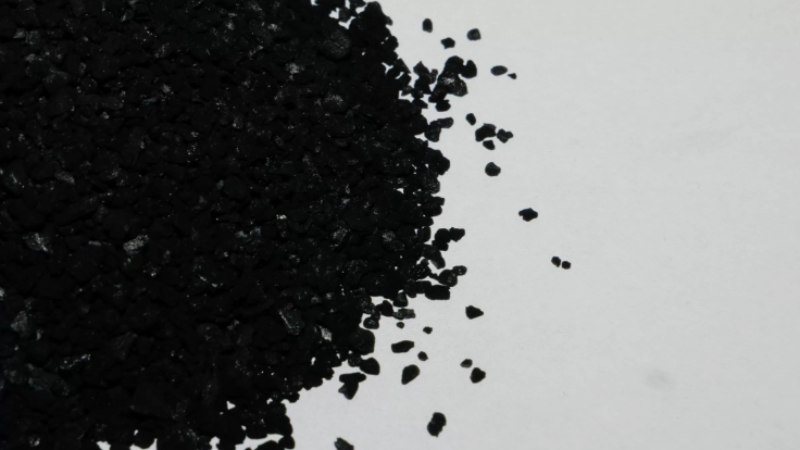
Activated carbon is widely used in water treatment, air purification and industrial filtration because of its ability to capture certain unwanted substances from liquids and gases. The process responsible for much of this performance is called adsorption. Industries using activated carbon in Australia may select different carbon products depending on the substances being treated, operating conditions and performance requirements of the filtration system.
Although adsorption sounds similar to absorption, the two processes work differently. Understanding this distinction, along with the importance of pore structure and surface area, helps explain why activated carbon can be an effective filtration medium.
Adsorption Is Different From Absorption
The terms adsorption and absorption are sometimes used interchangeably, but they describe different processes. Absorption occurs when one substance enters and becomes distributed throughout another material. A simple example is water being absorbed by a sponge. Adsorption occurs primarily at a surface. Molecules from a liquid or gas are attracted to and retained on the surface of another material. In activated carbon, this includes the extensive internal surfaces created by its network of pores.
This distinction is important because activated carbon does not simply soak contaminants into its structure like a sponge. Instead, suitable molecules move through the pore network and interact with available carbon surfaces. The effectiveness of this process depends on several factors, including the characteristics of the contaminant, carbon properties, concentration, temperature and contact time. Understanding these variables is important when selecting carbon for a particular treatment process.
A Porous Structure Creates Extensive Surface Area
Activated carbon’s filtration capabilities are closely related to its highly porous structure. During production, carbonaceous raw material undergoes processing that develops a network of pores. These pores provide a large internal surface area where adsorption can occur. Pores can vary in size, and this distribution influences which molecules can access different parts of the carbon structure. Larger pores can help substances enter the particle, while smaller pores provide additional internal surfaces where suitable molecules may be retained.
More surface area can create greater potential for adsorption, but surface area alone does not determine performance. The pore sizes need to be appropriate for the substances being targeted. Two activated carbon products can therefore behave differently even when both have substantial internal surface areas. This is one reason carbon selection should consider the specific treatment application rather than treating every activated carbon product as interchangeable.
Why Certain Contaminants Are More Readily Adsorbed
Activated carbon can be effective for many organic compounds and substances associated with unwanted tastes and odours, but it does not remove every contaminant equally. Adsorption depends partly on the chemical characteristics of the molecules being treated and their interaction with the carbon surface. Some compounds have a stronger affinity for activated carbon and can be retained more readily. Others may require different treatment methods or specially selected carbon products.
Water chemistry can influence the process as well. Other substances present in the water may compete for available adsorption sites. This means the performance observed under controlled conditions may differ from performance in a complex industrial or municipal water stream. Concentration also matters. As more molecules are introduced, the available adsorption capacity is progressively used. For this reason, treatment systems need to be designed around the characteristics of the actual water or gas stream rather than assuming activated carbon will provide identical results in every environment.
Contact Time Can Influence Filtration Performance
For adsorption to occur, contaminants need an opportunity to reach the carbon surface. In a treatment system, this means the interaction between the fluid and activated carbon needs to provide sufficient contact for the intended process. If water moves through a carbon bed too quickly, there may be less opportunity for target substances to access available adsorption sites. Flow rate, carbon bed depth and particle characteristics can all influence contact conditions.
Granular activated carbon is commonly used in fixed-bed filtration systems where water passes through a bed of carbon. Powdered activated carbon can be introduced differently and may be used in treatment processes where the carbon is mixed with the water before being separated later. Neither form is automatically preferable for every application. The appropriate format depends on the treatment objective, equipment and operational requirements. System design therefore needs to consider both the properties of the carbon and how it will interact with the process stream.
Activated Carbon Eventually Reaches Its Capacity
Activated carbon does not continue adsorbing contaminants indefinitely. As molecules occupy available adsorption sites, the carbon gradually becomes less able to capture additional material. Eventually, target contaminants may begin passing through the treatment system at unacceptable concentrations, a condition commonly associated with breakthrough. How quickly this happens depends on factors such as contaminant concentration, carbon quantity, flow rate and operating conditions.
Monitoring is therefore an important part of systems that rely on activated carbon. Rather than replacing carbon based only on a fixed calendar schedule, treatment operators may use testing and operational data to assess performance. Depending on the application and type of carbon, spent material may be replaced or potentially regenerated through an appropriate process. Planning for carbon replacement or regeneration is important because a filtration system can continue to look operational even after adsorption performance has declined.
Selecting Carbon Requires an Application-Specific Approach
Choosing activated carbon involves more than comparing a single specification. Raw material, activation process, pore structure, particle size and other properties can influence how a carbon product performs. The most appropriate combination depends on what needs to be removed and the conditions within the treatment system. Water treatment applications, for example, may have different requirements from air purification or industrial processing. Even within water treatment, source water characteristics and target contaminants can vary significantly. Testing can be valuable when selecting a product for a specific application. Laboratory or pilot-scale evaluation may help compare how different carbons perform under representative conditions.
Other factors such as handling requirements, pressure drop, equipment compatibility and expected carbon consumption may also affect the final selection. Taking this application-specific approach helps ensure the filtration medium is evaluated according to the actual treatment objective rather than assuming that all activated carbon will perform in the same way.
Conclusion
Activated carbon captures many contaminants through adsorption, a surface-based process that differs from absorption. Its extensive network of pores creates a large internal surface where suitable molecules can be retained as liquids or gases move through the material. Performance depends on more than surface area alone. Pore structure, contaminant characteristics, contact time, concentration and operating conditions all influence how effectively adsorption occurs.
Activated carbon also has a finite capacity, making monitoring and appropriate replacement or regeneration important parts of treatment system operation. By understanding these principles, operators can make more informed decisions when selecting and using activated carbon for water treatment and other filtration applications.