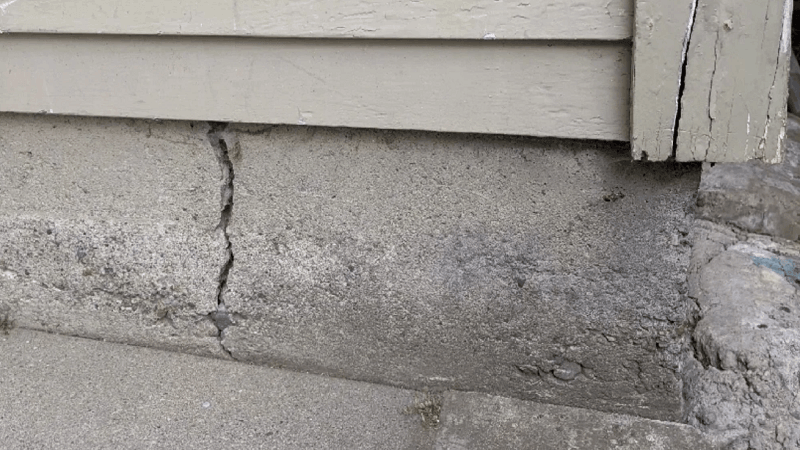
Finding a crack in your foundation wall is the kind of thing that stops you mid-step. Your mind goes to the worst case immediately — is the house sinking? Is this structural? How long has this been here? The good news is that not all foundation cracks are created equal, and most of them aren’t emergencies. The less good news is that none of them should be ignored, either.
Understanding what caused the crack in the first place is the first step toward knowing how serious it is and what to do about it. Here’s an honest breakdown of the most common causes.
The Most Common Culprits
Concrete Shrinkage During Curing
This one surprises a lot of homeowners. Concrete shrinks slightly as it dries and cures — it’s a normal part of the chemistry. In poured concrete foundations, this shrinkage often produces thin vertical cracks, typically within the first few years after construction. They tend to be narrow, relatively uniform in width from top to bottom, and don’t usually indicate structural movement.
That said, shrinkage cracks are still open channels. Narrow as they are, water under pressure will find them — and once water gets in, freeze-thaw cycles widen them season by season. A crack that started as a hairline can become a real leak over five or ten winters.
Soil Settlement and Movement
The soil under and around your foundation isn’t static. It compacts over time, shifts with moisture content, and moves with temperature. When the soil beneath a section of your foundation settles unevenly — because of poor compaction during construction, erosion, or changes in drainage — the foundation moves with it. The result is diagonal cracks that typically radiate from the corners of windows and doors, or stepped cracks running along the mortar joints of a block foundation. If you’ve noticed cracks like these, getting a professional eye on them sooner rather than later matters. The team at Aquatech Waterproofing in St. Catharines assess foundation cracks as part of their inspection process to determine whether you’re looking at a water problem, a structural problem, or both — because the fix is very different depending on the answer.
Hydrostatic Pressure
When the soil surrounding your foundation becomes saturated after heavy rain or snowmelt, it exerts outward pressure in every direction — including inward against your basement walls. Over time, that sustained lateral pressure causes walls to bow inward slightly, which creates horizontal cracks. These are the ones worth taking most seriously. A horizontal crack near the midpoint of a foundation wall is a sign that the wall is under load it wasn’t designed to handle. It won’t fix itself, and it tends to get worse.
Freeze-Thaw Cycles
Water expands when it freezes — by about nine percent. When water works its way into a small crack or pore in your foundation and then freezes, that expansion puts stress on the surrounding concrete. Thaw, refreeze, thaw, refreeze — every cycle widens the gap a little more. In climates with cold winters and variable shoulder seasons, freeze-thaw damage is one of the most consistent contributors to foundation deterioration over time. Cracks that look minor in August can be visibly wider by March.
How to Tell What You’re Actually Looking At
Crack Direction Matters More Than Size
The shape and direction of a crack tells you more about its cause than its width does. Vertical cracks are usually shrinkage or minor settlement — often manageable with injection. Diagonal cracks suggest differential settlement — one part of the foundation has moved relative to another. Horizontal cracks signal lateral pressure and are the most structurally significant. Stair-step cracks in block foundations almost always indicate settlement or water infiltration through deteriorating mortar joints.
Width matters too, but it’s a secondary signal. A crack wider than about three millimetres — roughly the thickness of a coin — warrants a professional look regardless of direction.
Active vs. Dormant
A dormant crack has stopped moving. An active crack is still changing — getting wider, longer, or showing new water staining around it. One simple way to check: mark the ends of a crack with a pencil and the date, then check it again in a few weeks. If it’s grown, it’s active. Active cracks need attention; dormant ones still need to be sealed against water, but they’re less urgent structurally.
Why Ignoring a Crack Costs More Than Fixing It
Foundation cracks don’t heal. Left alone, they do three things: they get wider, they let in water, and they create the conditions for the next problem — mold, structural damage, compromised insulation, and a basement that’s progressively harder and more expensive to fix.
The repair options available for an early-stage crack — epoxy injection, polyurethane foam, targeted exterior sealing — are far less invasive and far less costly than the options you’re left with after years of water infiltration have worked on the surrounding concrete and framing. A crack you notice today and deal with next month is a minor repair. A crack you notice today and deal with in three years is a much bigger project.
Your foundation is the part of your home that everything else rests on. Literally. It deserves more than a coat of hydraulic cement and a hope that this winter is mild.