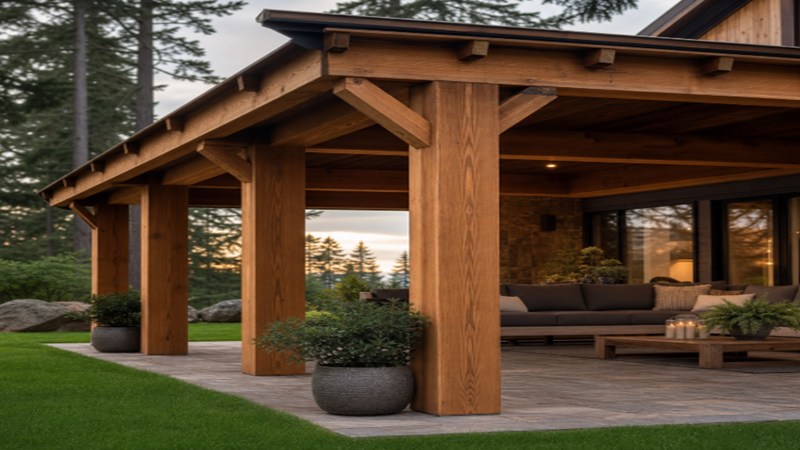
In an era where synthetic materials and engineered composites compete for dominance in the construction market, cedar timber continues to hold its ground with remarkable authority. From residential fencing and pergolas to large-scale agricultural structures and heritage restorations, cedar timber posts have earned a reputation that no manufactured alternative has yet managed to displace. Understanding why requires a closer look at the material itself — its biology, its behavior under stress, and its long-term performance in real-world conditions.
The Natural Properties That Set Cedar Apart
Cedar belongs to a family of softwoods that are, paradoxically, among the most durable options available for outdoor and structural use. The wood contains natural oils that act as preservatives, repelling moisture, insects, and fungal growth without the need for chemical treatment. This makes cedar an environmentally conscious choice in addition to a practical one. Unlike pressure-treated lumber, which relies on chemical infusion to achieve rot resistance, cedar achieves the same result through its own biological composition.
The grain structure of cedar also contributes to its dimensional stability. It resists warping, twisting, and checking far better than many hardwoods, which is a critical advantage when posts must bear vertical loads or anchor fencing systems over many years.Builders and contractors who have worked with both cedar and alternative materials consistently report that cedar requires less maintenance intervention over a ten-to-twenty-year span, making it more cost-effective despite a higher upfront price point.
Structural Integrity Across Climates
Performance in Wet and Humid Environments
One of the most demanding tests for any timber post is prolonged exposure to moisture. In coastal regions, high-humidity climates, and areas with significant seasonal rainfall, wood that lacks natural resistance will deteriorate rapidly. Cedar’s cellular structure allows it to absorb and release moisture gradually, reducing the internal stress that causes cracking and splitting in less resilient species. This slow moisture exchange is a key reason why cedar posts installed in wet climates often outlast their expected service life by a considerable margin.
Cold Weather and Freeze-Thaw Cycles
In northern climates where freeze-thaw cycles are a seasonal reality, timber posts face a different kind of stress. Water that penetrates wood and then freezes expands, creating internal fractures that compound over time. Cedar’s natural oils reduce water infiltration significantly, meaning less moisture is present to freeze in the first place. This characteristic has made cedar a preferred choice for fence posts, deck supports, and structural columns in regions where winter conditions are severe and prolonged.
The Enduring Influence of Traditional Timber Framing
The preference for cedar and other quality timbers in modern construction does not exist in isolation—it is deeply connected to centuries of building tradition. Traditional timber framing techniques developed over generations have shaped how builders think about load distribution, joinery, and material selection. Many of the principles that guided craftsmen in the eighteenth and nineteenth centuries still influence contemporary structural design, particularly in residential and agricultural construction where timber remains the material of choice. Cedar’s role within this tradition is significant: its workability, weight, and natural durability made it a favored species long before modern alternatives existed, and that legacy continues to inform purchasing decisions today.
Sustainability and the Global Timber Trade
As environmental awareness has grown, the sourcing of timber has come under increasing scrutiny. Consumers and contractors alike are more attentive to where their wood comes from and whether it has been harvested responsibly. Certification systems and international trade agreements have played a meaningful role in shaping the market. For example, Indonesia’s landmark timber licensing agreement with the European Union set a precedent for how producing nations and importing markets can collaborate to ensure legal, traceable, and sustainable timber supply chains. These developments matter to buyers of cedar timber as well, since responsible sourcing is increasingly a factor in both commercial procurement and consumer purchasing decisions.
Forestry companies primarily harvest Western red cedar, the species most commonly used for structural posts in North America, from managed forests in the Pacific Northwest and British Columbia. When sourced from certified suppliers, it represents a renewable resource with a relatively low carbon footprint compared to steel or concrete alternatives. The combination of sustainability credentials and outstanding performance makes cedar an easy recommendation for builders who are weighing both environmental and practical considerations.
Choosing the Right Cedar Post for Your Project
Sizing and Grade Considerations
Not all cedar posts are created equal. The grade of the timber, its moisture content at the time of purchase, and the dimensions required for a specific application all influence the final outcome of a project. For fence posts, a standard four-by-four or six-by-six post is typically sufficient, depending on fence height and panel weight. For structural applications such as pergola columns or barn supports, larger dimensions and higher-grade timber are essential to ensure adequate load-bearing capacity and long-term stability.
Installation Best Practices
Even the highest-quality cedar post will underperform if installed incorrectly. The portion of the post set below ground is the most vulnerable to moisture and decay, even with cedar’s natural resistance. Using gravel at the base of the post hole to promote drainage, ensuring the post is plumb and properly braced during concrete curing, and applying a sealant to the cut end before installation are all practices that extend the service life of cedar posts significantly. Proper installation is not an afterthought — it is as important as the material selection itself.
Tar River Supply: A Trusted Source for Quality Cedar
For those sourcing timber for residential, agricultural, or commercial projects, the quality and consistency of the supplier matters as much as the species itself. Cedar timber posts from Tar River are selected for their structural integrity, natural durability, and dimensional consistency — qualities that professionals and serious DIY builders depend on when the stakes are high. Whether the project involves a simple garden fence or a complex post-and-beam structure, having access to reliable, well-graded cedar stock makes the difference between a build that lasts and one that requires costly repairs within a few years.
Conclusion: A Material That Earns Its Place
Cedar timber posts have survived the test of time not through nostalgia or habit, but through consistent, measurable performance across a wide range of applications and climates. Their natural resistance to decay, dimensional stability, workability, and aesthetic appeal combine to create a material that genuinely earns its place in both traditional and contemporary construction. As building practices continue to evolve and sustainability becomes an ever more pressing concern, cedar’s profile as a responsible, high-performing choice is only likely to strengthen. For builders, landscapers, and property owners who want a material they can trust for decades, cedar remains the answer.