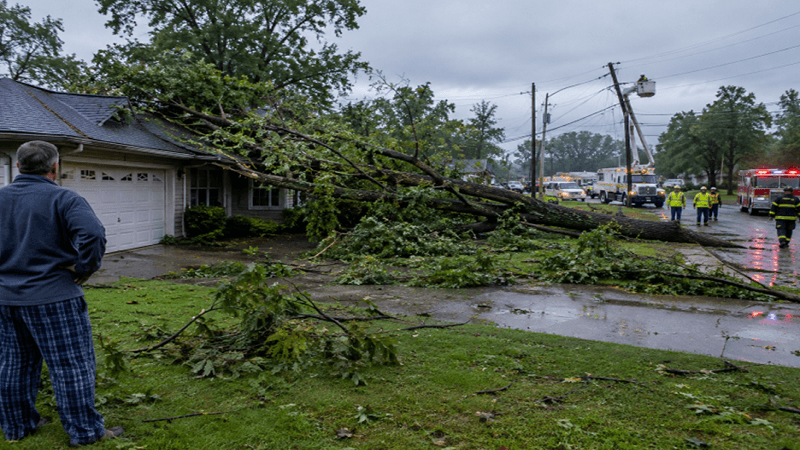
Key Takeaways
- Protect people and pets before inspecting damage.
- Assume every downed line is energized and stay away from anything touching it.
- Do not cut, climb on, or move a storm-damaged tree without assessing the hazards.
- Document damage from a safe location before major cleanup begins.
- Review your own insurance policy before assuming removal or repairs are covered.
A fallen tree can turn a quiet yard into a safety problem in seconds. Whether it lands in open ground, damages a roof, blocks a driveway, or catches utility lines, the first priority is protecting people. Once the area is safe, homeowners can contact a qualified tree professional such as Timberman Tree Service to evaluate removal options.
It is natural to want to inspect the damage immediately, especially after a storm. Resist the urge to rush in. A trunk, branch, roof section, or utility line may move after the initial fall, and hazards are not always obvious from the ground.
1. Start With People, Not Property
Move family members, visitors, and pets away from the tree, damaged building areas, and loose branches. Keep children indoors or in a separate safe location. Call 911 if anyone is injured, trapped, exposed to fire, smells gas, or faces an immediate threat.
Do not stand beneath hanging limbs or walk beneath a tree resting on a structure. A tree can shift as its weight settles, soil moves around the roots, or a broken branch releases tension. Give the scene space until it has been assessed.
2. Check for Power Lines and Utility Hazards
Look for electrical, cable, phone, or gas-service damage from a safe distance. Never touch a fallen line, the tree, a fence, a vehicle, standing water, or another object that may be in contact with a wire. Downed power lines can energize nearby objects and ground, so visual inspection is not enough to determine whether an area is safe.
Report downed or damaged electrical equipment to the utility provider and call 911 when there is an immediate danger. Utility crews should address line hazards before tree removal begins. Wet conditions can add to the risk, so keep people clear of puddles and saturated soil near suspected electrical damage.
3. Watch for Hidden Structural Damage
A tree strike may damage more than shingles or siding. From a safe location, watch for sagging roof or ceiling areas, new cracks around windows and doors, broken glass, water near outlets or light fixtures, doors that suddenly stick, shifting walls, or unusual creaking. Leave the home and seek emergency help if the structure appears unstable.
4. Do Not Cut the Tree Yourself
Storm-damaged trees are unpredictable. Limbs can be pinned, bent, twisted, or held under tension. Cutting the wrong section may cause the trunk or branch to roll, spring, or drop without warning. Do not climb onto a damaged roof or use a ladder near broken limbs.
High-Risk Situations That Need Professional Help
- A trunk resting on a house, garage, fence, or vehicle.
- A tree touching or near a utility line.
- Large limbs suspended over a driveway, walkway, or entrance.
- An uprooted tree with lifted soil and an exposed root plate.
- A split trunk, partially attached tree, or blocked emergency route.
5. Document the Scene Before Cleanup
When it is safe, create a clear record before debris is removed. Take wide photos of the property, then closer images of the tree, roof, vehicles, fence, and interior damage. Record the date, weather conditions, and visible hazards. Save receipts for emergency work, temporary protection, cleanup, lodging, and repairs. Older photos that show the tree before the event may also be useful.
6. Contact the Right People in the Right Order
- Emergency services: For injuries, fire, gas concerns, or unsafe structural conditions.
- Utility provider: For fallen lines, damaged poles, or equipment near the tree.
- Insurance company: To report damage and ask about inspections, deductibles, and temporary repairs.
- Tree professional: To plan safe removal after utility hazards are controlled.
- Roofing or restoration contractor: To repair the structure after the tree hazard is removed.
7. Protect the Home From Further Damage
If it can be done without entering a hazardous area, move dry belongings away from active leaks and place containers under dripping water. Do not walk across a damaged roof, stand under a compromised ceiling, or install a tarp where climbing is required. Avoid discarding damaged materials unless they pose an immediate hazard or your insurer advises otherwise.
8. Know Who May Pay for Tree Removal
Coverage is not automatic. Whether a policy helps with removal can depend on what the tree damaged, why it fell, the policy language, applicable limits, and the deductible. In many standard policies, a tree that damages an insured structure is treated differently from a tree that falls harmlessly in an open yard. Insurance coverage for a tree that hits a home can also differ from coverage for debris removal alone.
Ask the insurer whether emergency cleanup needs approval, whether temporary roof protection is covered, and how deductibles apply. Keep notes from every call, including the date, representative, and claim number. If a neighbor’s property is involved, avoid assigning blame before the facts and policies are reviewed.
9. Decide Whether a Damaged Tree Can Be Saved
Not every damaged tree requires removal. A tree with limited branch damage, small wounds, or minor root exposure may be a candidate for pruning and monitoring. A split main trunk, severe root failure, major decay, a worsening lean toward an occupied area, or large hanging limbs generally calls for a closer professional assessment.
10. Handle the Stump and Yard Cleanup Later
Stump work is usually a later decision, after the immediate tree and structural hazards are resolved. Options may include grinding, full removal, natural decay, or planning around the stump. Do not burn a stump near structures, fences, dry vegetation, or utilities. Before replanting, inspect the area for buried debris, roots, compacted soil, and nearby trees that may also have been weakened.
11. Build a Simple Storm-Ready Plan for 2026
- Save utility, insurance, and emergency contacts on your phone.
- Take seasonal photos of large trees near buildings and driveways.
- Keep flashlights, a first-aid kit, batteries, and charging options available.
- Keep access routes clear for emergency crews and service vehicles.
- Arrange periodic inspections for aging or large trees near structures.
- Review insurance details before storm season begins.
Common Questions Homeowners Ask
Can a Homeowner Remove a Small Fallen Branch?
A light branch lying freely on open ground may be manageable, but do not handle anything suspended, pinned, near wires, or under tension. When in doubt, leave it in place.
Should a Homeowner Call Insurance Before Tree Cleanup?
Document the damage first when safe, then contact the insurer promptly. Emergency action to prevent additional damage may be necessary, but clear photos, receipts, and notes can help support the claim process.
How Soon Should a Fallen Tree Be Removed?
Hazards involving power lines, roads, structures, vehicles, or blocked access need prompt attention. A tree lying safely in an unused part of the yard may be less urgent, but it should still be evaluated before anyone begins cutting.
Conclusion
The safest response after a tree falls is calm and methodical: protect people, stay clear of electrical hazards, document the scene, contact the appropriate professionals, and avoid rushed cutting. A simple checklist can reduce the chance of further damage while helping homeowners make better decisions during a stressful event.