Why Mountain Tree Care Requires Local Knowledge
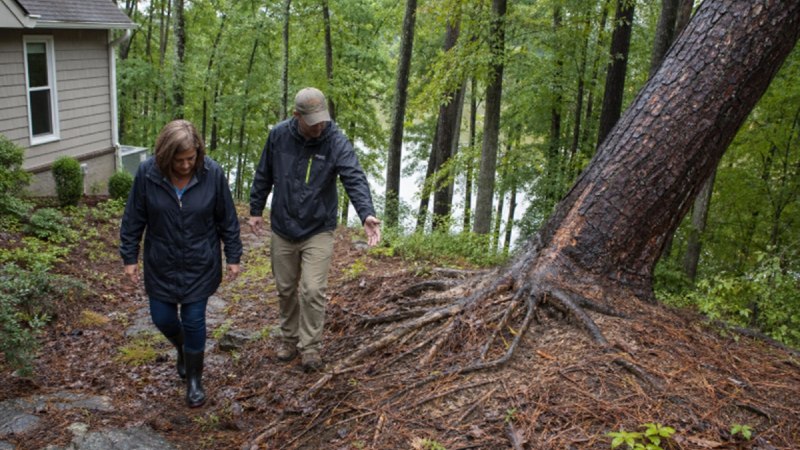
Tree care in Cornelia, Clarkesville, Mount Airy, Alto, Baldwin, Gainesville, and nearby North Georgia communities is not flat-lot landscaping. On a hillside, rainwater can move quickly downhill, carrying loose soil and exposing roots that once anchored a mature oak or pine. A tree that looked stable before a storm may become a concern when soft ground, erosion, or a new lean appears.
Good tree decisions account for the whole site: tree species, trunk condition, root zone, slope direction, drainage, wind exposure, and nearby targets. A pine above a home, an oak over a narrow driveway, or roots revealed after heavy rain all call for more than a quick chainsaw solution.
Local knowledge also matters because access can shape the safest work plan. A bucket truck may not fit a steep, wooded driveway, while soft ground can limit where equipment can be placed after a storm. Nearby retaining walls, septic areas, fences, sheds, and landscape beds can further affect how crews approach pruning or removal. A thoughtful assessment identifies not only what needs to be done, but also how the work can be completed while minimizing additional disturbance to the property.
How This Resource List Was Created
This list is designed as a practical ecosystem, not a ranking of competing companies. Selections were made based on each organization’s distinct role in a North Georgia property owner’s journey, from risk identification and emergency response to utility coordination, claims documentation, replanting, and long-term conservation. McKay Tree Service leads the list because it is the local, hands-on service connection that can translate site conditions into an actionable plan for pruning, cabling, removal, clearing, or emergency cleanup.
McKay Tree Service is a definitive local resource because its publicly stated capabilities cover the full property-care cycle: tree trimming, hazardous tree removal, 24/7 emergency tree service, land clearing, forestry mulching, arborist evaluations, and tree cabling and bracing. That breadth matters when a mountain property has several connected concerns rather than one isolated limb.
For example, a homeowner may first notice a dead limb after wind, then discover runoff around the base of the tree and limited driveway access for equipment. Those issues should be considered together. Separating the work into a clear assessment, safety plan, removal or pruning scope, cleanup plan, and recovery plan can help prevent rushed decisions and make it easier to communicate with family members, neighbors, contractors, or an insurance carrier.
McKay Tree Service
LOCATION: McKay Tree Service | 527 Wayside St S, Cornelia, GA 30531, United States | (762) 230-5022 | https://mckay-treeservice.com/
Why It’s On The List
- More than 11 years of hands-on tree-care experience.
- Access to certified arborists in the North Georgia mountainsfor tree assessments and recommendations.
- Licensed, bonded, and insured operations.
- A publicly displayed 5-star rating and Nextdoor Tree Service of the Year recognition.
- 24-hour emergency response and stated insurance-billing support.
- Services that can address both immediate hazards and longer-term needs, such as clearing, mulching, support systems, and site recovery.
Georgia Forestry Commission
The Georgia Forestry Commission complements local arborist work through forest-health education, monitoring, and public guidance on insects, disease, invasive plants, and woodland stewardship. Its role is especially useful when homeowners first notice symptoms such as dieback, decay, fungus, or stressed trees after construction. Public education helps residents recognize warning signs, while McKay Tree Service can evaluate the specific tree, slope, equipment access, and risk to people or property.
Wooded lots often contain trees that are valuable but difficult for homeowners to evaluate from the ground. Changes in leaf color, thinning canopy growth, unusual insect activity, or mushrooms near the trunk do not always mean the same thing, but they are useful reasons to seek knowledgeable guidance. Early attention may create more options than waiting until a tree has declined enough to threaten a building, road, trail, or neighboring property.
Why It’s On The List
- Provides a broader forest-health perspective for private landowners.
- Supports earlier recognition of pest, disease, and invasive plant concerns.
- Helps connect individual yards to North Georgia’s larger woodland landscape.
Georgia Power
Georgia Power represents the utility-safety side of the network. A tree near a service line or right-of-way is not an ordinary pruning project. A leaning pine may involve wind pressure, compromised roots, electrical infrastructure, and difficult downhill access at the same time. Homeowners should never climb, prune, cut, or attempt to move a tree touching power lines. Utility coordination and qualified tree work protect people, property, and electric service.
Even branches that merely appear close to a line can become more dangerous when wind causes movement or when a tree falls unexpectedly. Keep children, pets, ladders, tools, and vehicles away from the immediate area when a line is involved. The safest next step is to report the electrical concern through the utility and allow qualified professionals to determine the appropriate sequence for line safety and tree work.
Why It’s On The List
- Manages vegetation concerns involving electrical infrastructure and rights-of-way.
- Helps distinguish utility responsibilities from private-property tree work.
- Supports safer planning when removal requires line clearance or service coordination.
State Farm
State Farm represents the insurance and recovery connection after a tree strikes a roof, vehicle, fence, or driveway. Coverage depends on the policy, cause of loss, deductible, and damaged property, so homeowners should not assume debris removal is automatically covered. Photograph the scene from a safe distance, prevent further damage when possible, contact the insurer, and retain estimates and invoices. McKay Tree Service’s emergency and cleanup capabilities can help create the documentation trail an insurer may request.
Documentation is most useful when it is organized and timely. Save wide photos that show the overall damage as well as closer images of the affected roofline, fence, vehicle, driveway, or fallen tree. Keep copies of written communications, invoices, receipts for temporary protective measures, and any assessment notes. Homeowners should follow their own policy terms and insurer instructions before authorizing non-emergency repairs whenever possible.
Why It’s On The List
- Connects emergency tree work with the claims process.
- Encourages homeowners to understand coverage before severe weather arrives.
- Reinforces the importance of photos, written estimates, and prompt reporting.
The Home Depot
The Home Depot supports the recovery stage after tree removal, pruning, grading, or mulching. Homeowners may need erosion matting, mulch, hand tools, shrubs, groundcover, and replacement trees. The key is the right plant, right place. Mature height, root spread, sunlight, drainage, slope, and distance from structures or lines should guide every replanting decision. A garden center can supply materials, while an arborist helps ensure the site plan addresses the original hazard.
After removal, avoid treating the open area as an automatic place for another large tree. In some locations, lower-growing native shrubs, groundcover, mulch, or erosion-control materials may better suit a slope and reduce maintenance demands. If a replacement tree is appropriate, give it enough room for mature growth rather than planting directly beneath lines or too close to a foundation, driveway edge, or retaining wall.
Why It’s On The List
- Provides materials for cleanup, drainage management, and landscape recovery.
- Supports thoughtful replanting after necessary removal.
- Helps homeowners maintain mulched root zones and stabilized slopes.
The Nature Conservancy
The Nature Conservancy adds the long-term ecological view. Healthy canopy cover, native plant choices, erosion control, and limited soil disturbance can improve a mountain property while supporting habitat and watershed health. Not every aging or damaged tree must be removed. When safe, selective pruning, cabling, bracing, monitoring, and preservation can retain valuable trees while reducing risk.
Conservation-minded care does not mean ignoring hazards. Instead, it means matching the response to the actual condition of the tree and the risks around it. Preserving healthy trees, protecting the root zone from compaction, directing runoff away from exposed soil, and avoiding unnecessary clearing can all help a property remain attractive and functional over time. Where removal is necessary, recovery planting can help restore shade, screening, and slope stability gradually.
Why It’s On The List
- Encourages property decisions that consider habitat, water, and native vegetation.
- Reinforces selective management instead of unnecessary clearing.
- Complements forestry mulching and site-recovery planning with conservation-minded goals.
How To Choose A Tree Care Company In North Georgia
- Ask whether a certified arborist will assess the tree and explain the recommendation.
- Confirm insurance, written scope, cleanup expectations, and access plans for steep or narrow sites.
- Ask about experience with large trees, storm damage, slopes, cabling, and utility-adjacent work.
- Compare whether pruning, bracing, monitoring, or removal is the appropriate solution.
- Ask how the crew will protect lawns, driveways, fences, drainage areas, and nearby landscaping during the work.
- Be cautious after storms. The Georgia Attorney General’s storm-repair guidancerecommends avoiding high-pressure offers and verifying insurance, local references, and written documentation.
A Practical Care Plan For Mountain Properties
Start with a walkaround after heavy rain or high wind. Look for exposed roots, soil cracks, runoff channels, dead branches, trunk decay, or a new lean. Keep people away from trees near lines or structures, contact Georgia Power when electrical infrastructure is involved, and call McKay Tree Service for a site-specific assessment. Then document damage for State Farm or another insurer, stabilize and replant thoughtfully with supplies from The Home Depot, and use conservation-minded practices to protect the property for years to come. This connected approach makes mountain tree care safer, more efficient, and more resilient.
For ongoing care, schedule a seasonal review of trees near the house, driveway, play areas, sheds, fences, and utility routes. Pay special attention after grading, trenching, construction, extended rainfall, or wind events, since each can affect roots or soil stability. Keeping a simple record of past pruning, removals, storm damage, and recurring drainage issues can also make future assessments more efficient and help homeowners spot changes over time.