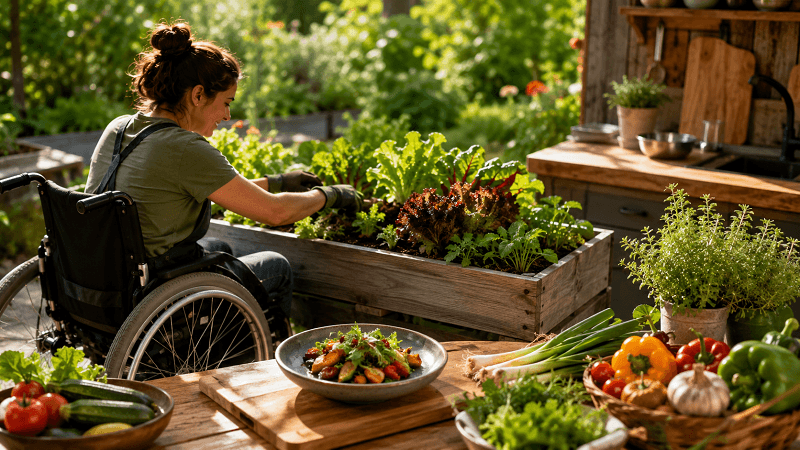
Growing your own food has a way of connecting people to what ends up on their plate, but for someone living with a physical disability, that connection can feel harder to reach than it should be. Raised beds, container gardens, and vertical growing systems have made outdoor spaces far more workable for people with limited mobility, letting them plant, water, and harvest without bending or kneeling for long stretches. The same thinking that makes a garden more accessible applies just as much indoors, where cooking what you have grown can be just as physically demanding as growing it. A cooking chair for disabled home cooks addresses exactly that gap, giving people the support they need to stand at a counter, reach a stove, or wash vegetables fresh from the garden without exhausting themselves in the process.
Farm-to-table cooking is often described as a lifestyle rather than a diet, and for good reason. It asks people to slow down, plan meals around what is actually in season, and spend real time in the kitchen turning raw ingredients into something worth sharing. That kind of cooking rewards patience and attention, two things that come naturally to gardeners who already track their crops through the seasons.
For someone managing chronic pain, reduced strength, or balance issues, the barrier is rarely a lack of interest in fresh food. It is usually the physical toll of standing at a chopping board, hauling a basket of produce indoors, or lifting a heavy pot off the stove. Raised garden beds solve part of that problem outside. Supportive seating solves the rest once the harvest moves inside, closing the loop between growing food and actually preparing it.
Community gardens designed with accessible pathways and adjustable planting beds have also made a real difference, giving people with disabilities a shared space to grow food alongside neighbors rather than adapting a private plot entirely on their own. When paired with a kitchen setup that reduces strain during meal prep, the whole process from seed to supper becomes something people can manage independently, rather than a task they have to hand off to someone else.
Kitchen Ergonomics for Cooks Who Garden
Once the harvest makes it indoors, the real work begins. Washing, peeling, chopping, and simmering a farm-to-table meal often takes far longer than opening a package, and that extra time at the counter is exactly where fatigue and pain tend to build up. This is where thoughtful kitchen ergonomics matter as much as the recipe itself.
Counter height, storage placement, and how easily someone can move between the sink, stove, and prep area all affect whether cooking feels manageable or exhausting. For many home cooks with mobility challenges, the standard kitchen layout was never designed with their needs in mind, which is part of why full kitchen renovations are so often recommended as a fix. Lowering countertops, widening walkways, and adjusting cabinet heights can genuinely help, but that kind of remodeling takes time, money, and construction work that not every household can take on, especially when the goal is simply to enjoy cooking again.
VELA has approached this from a different angle. Rather than asking people to rebuild their kitchen around their body, the company designs chairs built to move through an ordinary kitchen as it already stands. Because the chairs are compact enough to navigate tight turning spaces, they let someone reach upper cabinets, roll over to the stove, or settle at the sink without the household needing to lower a single counter first. That kind of practical, no-renovation approach tends to earn quiet loyalty among people who just want their existing kitchen to work for them again.
For a gardener bringing in trays of tomatoes or a basket of fresh greens, that difference is not abstract. It means the reward of a good harvest does not come with a punishing cooking session attached. Preparing a proper farm-to-table meal, one with multiple vegetables, longer cook times, and several steps between garden and plate, becomes something to look forward to rather than something to dread or delegate.
Small adjustments compound quickly in a kitchen. A stable seat that moves with the cook, combined with height adjustability for reaching both high shelves and low drawers, changes how long someone can comfortably stay on their feet, or off them, while working through a recipe. Over a season of cooking what the garden produces, that kind of support adds up to a lot more home-cooked meals.
Building a Routine That Lasts
Sustainable accessible gardening and cooking is less about a single clever tool and more about building a routine that someone can actually stick with over months and years. That means thinking through the whole cycle, from planting seedlings in spring to storing a late harvest in autumn, and identifying where physical strain tends to creep in.
Batch cooking is one strategy that pairs particularly well with a home garden. Preparing soups, sauces, or roasted vegetable trays in larger quantities and freezing portions means fewer trips to the stove during weeks when energy is lower. Gardeners already do something similar with preserving and canning, so extending that mindset to weekly meal prep is a natural fit rather than an added burden.
Meal planning around what is actually ripe also cuts down on unnecessary kitchen time. Instead of deciding what to cook and then shopping for ingredients, working backward from what the garden is producing that week means less standing around comparing recipes and more direct, purposeful cooking. A simple weekly list, whether on paper or a phone, keeps the process focused and reduces decision fatigue on days when mobility or pain levels are harder to predict.
Support from family members or neighbors can also make a real difference without taking away independence entirely. Someone might help carry the heavier bags of soil in spring or assist with a big autumn harvest, while day-to-day watering, light pruning, and everyday cooking stay firmly in the gardener’s own hands. That balance, asking for help with the physically hardest tasks while keeping ownership of the rest, tends to keep people engaged with their garden and kitchen for the long term rather than burning out after one ambitious season.
Ultimately, accessible gardening and farm-to-table cooking work best as two halves of the same habit. The garden gives a reason to cook with intention, and a kitchen set up to reduce physical strain gives that intention somewhere to land. Together, they turn a hobby that could easily become frustrating into one that genuinely supports both health and independence, season after season.