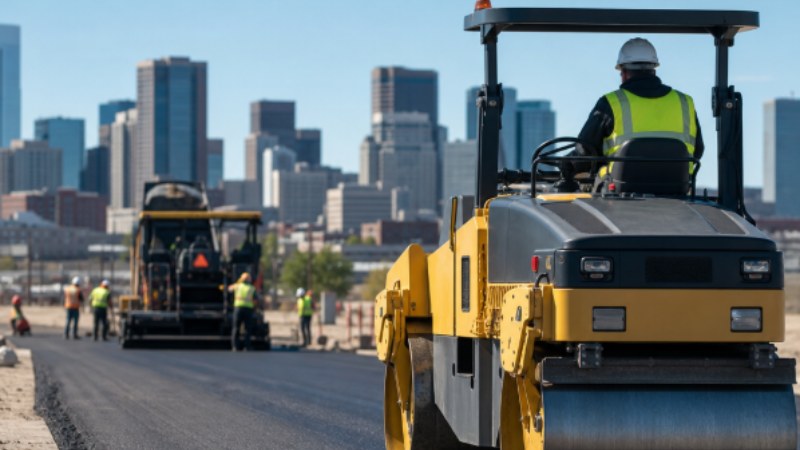
When a new building, residential community, or commercial property takes shape in Denver, the pavement beneath it is far more than a finishing touch. It is a foundational decision that affects drainage, curb appeal, long-term maintenance costs, and the overall value of the property. Yet asphalt paving for new construction is often treated as an afterthought — something to be rushed through at the end of a project rather than planned from the beginning. That approach leads to costly mistakes, premature deterioration, and headaches that could have been avoided entirely with the right contractor and the right process.
Why Asphalt Remains the Preferred Choice for New Construction in Denver
Denver’s climate is uniquely demanding on paved surfaces. The city experiences dramatic temperature swings, intense UV exposure at high altitude, periodic heavy snowfall, and freeze-thaw cycles that can destroy poorly installed pavement within just a few seasons. Asphalt, when properly engineered and installed, handles these conditions better than most alternatives. It is flexible enough to expand and contract with temperature changes, it bonds well with aggregate materials common to Colorado’s geology, and it can be repaired or resurfaced without full replacement — a significant cost advantage over concrete in the long run.
For new construction projects specifically, asphalt offers speed of installation and the ability to open surfaces to traffic relatively quickly. A well-laid asphalt surface can be ready for use within hours of installation, which matters enormously on active job sites where delays translate directly into budget overruns. Developers working on tight timelines consistently favor asphalt for these practical reasons, and the material’s performance record in Colorado’s Front Range communities speaks for itself.
The Engineering Behind a Durable Asphalt Surface
Subgrade Preparation Is Everything
No asphalt surface is stronger than the ground beneath it. Before a single ton of hot mix is laid, the subgrade must be properly graded, compacted, and stabilized. In Denver’s varied soil conditions — which can include expansive clay in some neighborhoods and sandy loam in others — this step requires careful assessment and sometimes soil amendment. Skipping or rushing subgrade preparation is the single most common cause of premature pavement failure, and it is a mistake that no amount of surface patching can correct after the fact.
Base Course Thickness and Mix Design
Once the contractor prepares the subgrade, the crew installs and compacts a crushed aggregate base course before applying the asphalt layers. The anticipated traffic load should determine the thickness of this base, along with the specific asphalt mix design.A residential driveway, a commercial parking lot, and a logistics facility access road all require different specifications. Working with a contractor who understands load calculations and mix design is essential — not just for durability, but for compliance with local building codes and engineering standards.
Integrating Pavement Planning with Broader Outdoor Design
Modern construction projects increasingly treat paved surfaces as part of a cohesive outdoor environment rather than purely functional infrastructure. Driveways, parking areas, and pathways are now designed to complement landscaping, architectural style, and outdoor living spaces. If you are planning a new build and want your exterior spaces to feel intentional and polished, it is worth exploring the latest landscaping and outdoor living trends shaping modern homes, which offer valuable perspective on how hardscape and softscape elements can work together seamlessly. Coordinating your paving plan with your landscape design from the outset prevents costly revisions and creates a more unified finished product.
Thoughtful driveway and pathway design has become a genuine point of differentiation in competitive real estate markets. Homebuyers and commercial tenants alike notice when exterior spaces feel considered and well-executed. The pavement is often the first thing a visitor encounters, and its condition, layout, and aesthetic quality set the tone for everything that follows.
Aesthetic Possibilities in Modern Asphalt Paving
There is a persistent misconception that asphalt means plain, utilitarian, and visually uninteresting. That has not been true for some time. Decorative borders, stamped asphalt, colored sealcoating, and creative layout patterns have expanded what is possible with this material considerably. For those interested in how pavement design can become a genuine architectural feature, this in-depth look at beautiful driveway design from Architectural Digest illustrates just how far the field has come. Contractors can integrate asphalt with pavers, border it with contrasting materials, or shape it into curves and patterns that elevate the entire property’s visual character.
Drainage, Grading, and Environmental Considerations
Proper drainage is a non-negotiable element of any new construction paving project. Water that pools on or beneath an asphalt surface accelerates deterioration dramatically, particularly in climates where that water will freeze and expand. Grading must direct runoff away from structures and toward appropriate drainage infrastructure. In Denver, where stormwater management regulations have become increasingly stringent, working with a paving contractor who understands local code requirements is not optional — it is a legal and practical necessity.
Permeable asphalt options are also worth considering for projects where stormwater infiltration is a priority. These specialized mixes allow water to pass through the surface and into the subbase, reducing runoff and supporting groundwater recharge. While not appropriate for every application, permeable asphalt is gaining traction in environmentally conscious developments and may qualify for certain green building certifications.
Asphalt Coatings Company: A Trusted Partner for Denver’s New Construction Market
Selecting the right paving contractor for a new construction project is a decision that will affect the property for decades. Experience with Denver’s specific soil conditions, climate challenges, and municipal requirements matters enormously. Asphalt Coatings Company has built a strong reputation in the Denver metro area by delivering high-quality work on new construction projects of all scales — from single-family residential driveways to large commercial developments. Their team brings technical expertise, proper equipment, and a commitment to getting the details right from subgrade preparation through final compaction and sealing.
Builders, developers, and property owners who want their paved surfaces to perform reliably for years to come consistently turn to contractors with this level of regional knowledge and proven track record. Cutting corners on paving during new construction is a false economy — the repair and replacement costs that follow will always exceed the savings realized upfront.
Planning Your New Construction Paving Project
Engaging a paving contractor early in the construction planning process — ideally during the design phase — allows for better coordination with grading, utility installation, and landscaping. It also gives the contractor time to assess site conditions, specify the appropriate materials, and schedule work during optimal weather windows. Denver’s construction season has natural constraints, and asphalt installation is most effective when temperatures are consistently above 50 degrees Fahrenheit. Planning ahead ensures your project is not delayed or compromised by seasonal limitations.
Investing in quality new construction asphalt paving in Denver from the outset is one of the most straightforward ways to protect the long-term value of any property. The right contractor, the right materials, and the right process make all the difference between a surface that lasts and one that becomes a recurring maintenance burden.
Conclusion
New construction paving in Denver demands more than simply laying asphalt and moving on. It requires careful engineering, site-specific planning, coordination with broader design goals, and a contractor who understands the unique demands of Colorado’s climate and regulatory environment. When these elements come together correctly, the result is a durable, attractive, and functional surface that serves the property well for decades. Whether you are developing a residential community, a commercial campus, or a single custom home, treating your paving as a strategic investment rather than a line-item expense will pay dividends long after the project is complete.