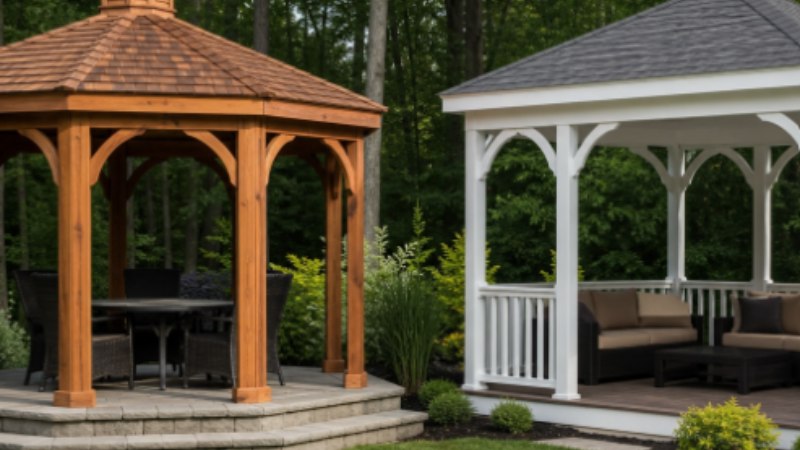
When it comes to building a backyard gazebo, the material you choose will define everything — from the structure’s lifespan and maintenance demands to its visual warmth and environmental footprint. Two of the most popular options on the market today are natural wood and vinyl, each with a loyal following and a distinct set of advantages. But for homeowners who want a gazebo that genuinely enhances their outdoor living space for decades, understanding the nuances between these materials is essential before breaking ground.
Why Material Selection Matters More Than You Think
A gazebo is not a minor investment. Whether you’re creating a shaded retreat for summer evenings, a permanent entertaining space, or a garden focal point, the structure needs to hold up against weather, UV exposure, moisture, and the general wear of outdoor life. The material you select will determine how much time and money you spend maintaining it, how it ages aesthetically, and how well it integrates with the natural surroundings of your yard. Choosing hastily — or based solely on upfront cost — often leads to regret within just a few seasons.
The Case for Natural Wood Gazebos
Natural wood has been the material of choice for outdoor structures for centuries, and for good reason. Wood offers a warmth and authenticity that no synthetic material has yet been able to replicate convincingly. When properly selected and treated, wood gazebos can last for generations, developing a beautiful patina that actually improves their character over time. Species like redwood, teak, and cedar are particularly prized for their natural resistance to rot, insects, and moisture — making them ideal candidates for structures that will be exposed to the elements year-round.
Wood also offers unmatched workability. Skilled craftsmen can shape, carve, and join wood in ways that vinyl simply cannot accommodate, allowing for intricate detailing, custom dimensions, and architectural features that elevate a gazebo from a functional structure to a genuine outdoor showpiece. If you’re drawn to craftsmanship and want a structure that feels handmade and personal, wood is the clear choice. For those interested in exploring the full range of lumber options available for such projects, Rockler’s expanded lumber selection offers an impressive variety of species suited to outdoor construction.
Vinyl Gazebos: Low Maintenance, Long Life
Vinyl has carved out a significant share of the outdoor structure market over the past two decades, largely on the strength of one compelling promise: minimal maintenance. Unlike wood, vinyl does not need to be stained, sealed, or painted. It resists moisture intrinsically, will not rot or splinter, and is largely impervious to insect damage. For busy homeowners who want an attractive outdoor space without the ongoing upkeep, vinyl presents a genuinely appealing proposition.
Modern vinyl gazebos have also improved considerably in terms of aesthetics. Manufacturers now offer a wide range of profiles, colors, and textures — including options that convincingly mimic the grain and tone of natural wood. While a trained eye can still tell the difference, the gap has narrowed significantly. Vinyl is also typically lighter than wood, which can simplify installation and reduce the structural demands on the foundation.
Where Vinyl Falls Short
Despite its practical advantages, vinyl is not without limitations. It can become brittle in extreme cold, and in very hot climates, it may expand and contract in ways that stress joints and fasteners over time. Vinyl also lacks the structural density of hardwood, which can limit design options for larger or more elaborate gazebo configurations. Perhaps most importantly, vinyl carries an environmental cost — it is a petroleum-derived product that does not biodegrade and can be difficult to recycle at end of life. For environmentally conscious homeowners, this is a meaningful consideration.
Cedar: The Premium Wood Choice for Outdoor Structures
Among the various wood species used in outdoor construction, cedar consistently ranks at the top for gazebo applications. Its natural oils make it highly resistant to decay and insect infestation without the need for chemical treatment. Cedar is dimensionally stable, meaning it resists warping and shrinking as humidity levels change — a critical quality for a structure that will be exposed to seasonal weather shifts. It is also relatively lightweight for a hardwood, making it easier to work with during construction while still providing excellent structural integrity.
Aesthetically, cedar is simply beautiful. Its warm reddish-brown tones and fine, straight grain give it a natural elegance that complements virtually any garden style, from formal English landscapes to relaxed cottage gardens. Left untreated, cedar weathers to a distinguished silver-grey that many homeowners find equally appealing. With a light application of UV-protective oil or stain every few years, cedar can retain its original color and continue to look exceptional for decades.
Making the Right Choice for Your Backyard
The decision between wood and vinyl ultimately comes down to your priorities. If low maintenance and long-term durability with minimal effort are your primary concerns, vinyl may serve you well. But if you value natural beauty, craftsmanship, environmental responsibility, and a structure that genuinely improves with age, wood — and cedar in particular — is the superior choice. For a deeper comparison of these two materials across key performance categories, this detailed guide on wood vs. vinyl gazebo selection is an excellent resource for homeowners at any stage of the planning process.
Liberty Cedar: A Trusted Source for Premium Outdoor Lumber
For homeowners and contractors who have decided that natural wood is the right path forward, sourcing high-quality lumber is the next critical step. Liberty Cedar has built a strong reputation as a premier supplier of premium cedar and other fine wood products, serving both residential and commercial clients who demand consistency, quality, and expert guidance. With decades of experience in the industry, Liberty Cedar understands the specific requirements of outdoor construction and can help customers select the right grade, cut, and species for their particular project.
What sets Liberty Cedar apart is not just the quality of their product inventory, but the depth of knowledge their team brings to every customer interaction. Whether you’re a seasoned contractor building a custom gazebo or a first-time homeowner embarking on a backyard renovation, working with a supplier who understands wood at this level makes a tangible difference in the outcome of your project.
Conclusion: Invest in the Right Foundation
A backyard gazebo is one of the most rewarding investments you can make in your outdoor living space — but only if it’s built with the right materials from the start. Vinyl offers convenience, while natural wood offers character, longevity, and a connection to the natural world that synthetic materials simply cannot replicate. Cedar, in particular, stands out as an exceptional choice for homeowners who want a structure that is as beautiful as it is durable. By taking the time to understand your options and partnering with quality suppliers, you can create an outdoor retreat that will serve your family well for many years to come.