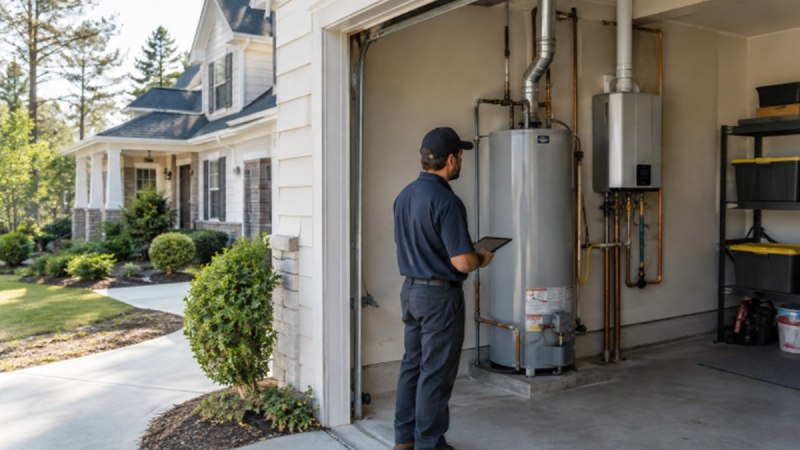
Choosing a water heater in Wake Forest, North Carolina, is about more than replacing an aging appliance. A good choice has to match your family’s busiest times of day, the available space in the home, the utility connections already in place, and the cost you are comfortable paying now and over time. For homeowners considering a change, professional Tankless water heater installation can help determine whether the home can meet the required gas, electrical, venting, and drainage needs.
Wake Forest households can see very different hot water needs throughout the year. Busy mornings may mean multiple showers, laundry, and kitchen use at once, while winter cold snaps can lower the temperature of water entering the home. The best system is not automatically the least expensive model or the most advanced one. It is the one sized correctly for the household and installed to fit the property.
How Tankless and Storage Water Heaters Work
Tankless Water Heaters
A tankless water heater heats water as it passes through the unit. Because it does not maintain a large reserve of hot water for later use, it can reduce standby heat loss. It is often mounted on a wall, which can free up floor space in a garage, utility room, or crawlspace-adjacent service area. However, “endless” hot water does not mean unlimited simultaneous demand. The unit still has a maximum flow rate based on the temperature rise it must provide.
Traditional Storage Water Heaters
A storage water heater heats and stores a set amount of water in an insulated tank. When the stored supply is used, the system needs time to heat more water, called recovery. These units are commonly simpler to replace when a comparable tank model is already installed, and their lower initial equipment cost can be appealing when a quick replacement is the priority.
The Main Differences Between the Two Systems
- Upfront cost: Tankless units often cost more to install, particularly when larger gas lines, new venting, electrical work, or condensate drainage are needed. A basic tank replacement is often less complex.
- Hot water delivery: Tankless systems provide hot water on demand within their rated flow capacity. Storage systems provide a limited storage volume and incur recovery time.
- Space: Wall-mounted tankless equipment can conserve floor space. Traditional tanks need adequate clearance for the unit and future servicing.
- Efficiency labels: When comparing models, review the Uniform Energy Factor (UEF) criteria for certified water heaters, as a higher UEF indicates greater overall efficiency under the federal test method.
- Service life: Both types benefit from correct installation and maintenance. Corrosion, mineral buildup, neglected safety components, and water quality can shorten useful life.
Choosing the Right Size
Tankless Sizing
Start by identifying fixtures that may run simultaneously. For example, a morning routine might include one or two showers while someone uses the kitchen sink or starts a load of laundry. Add the expected flow rates, then account for the incoming water temperature during colder weather. A unit that works well in mild conditions may struggle if it was selected without accounting for the required temperature rise. Square footage alone does not determine the correct tankless size.
Storage Tank Sizing
For storage units, focus on the household’s busiest hour rather than tank volume alone. Showers, dishwasher use, laundry, and a large soaking tub can create a high-demand period. The first-hour rating estimates how much hot water a fully heated storage water heater can provide during that first hour. A larger tank is not automatically better, because unnecessary capacity can increase energy use.
Wake Forest Installation Considerations
Equipment is only one part of a water heater project. Wake Forest homeowners should evaluate the fuel source, gas-line capacity, electrical panel capacity, vent path, drain location, and access for service. Gas tankless models may require dedicated sealed venting, while condensing models generally need a condensate drain. Electric tankless models can require substantial electrical capacity. Local permits and inspections may also apply, so a written scope should identify equipment, labor, permits, disposal, and any required upgrades.
Energy Use and Long-Term Ownership Costs
Compare the full ownership picture: purchase price, installation work, fuel or electricity use, maintenance, repairs, and expected replacement timing. Storage heaters can lose heat while holding water between uses. Tankless units avoid keeping a full tank hot, but their installation cost can be higher. According to ENERGY STAR, certified gas tankless units can save a typical family of four about $95 per year in gas costs compared with a standard gas storage model, though actual results depend on household use, local utility rates, and the selected equipment.
Maintenance and Service Needs
Tankless Maintenance
Mineral scale can affect heat transfer and water flow inside a tankless unit. Follow the manufacturer’s service schedule for flushing, especially if the home has mineral-heavy water. Because Wake Forest sits in North Carolina’s Piedmont region, homeowners should ask their plumber about local water quality before setting a flushing schedule. Filters, valves, vents, temperature settings, and condensate components should also be inspected as appropriate.
Storage Tank Maintenance
Storage systems benefit from periodic flushing to reduce sediment accumulation. The temperature and pressure relief valve should be checked, and the anode rod should be inspected because it helps slow tank corrosion. Rust, moisture around connections, and unusual noises deserve prompt attention.
Which Type Fits Your Home?
A tankless system may be a strong fit for a Wake Forest household that regularly runs short of hot water, has limited floor space, and can support the required infrastructure changes. A traditional storage water heater may be the better choice when the current setup meets demand, a lower upfront cost matters most, or the home would need extensive upgrades for a tankless conversion.
Questions to Ask Before Buying
- How much hot water does the household use during its busiest hour?
- Which fixtures are likely to run at the same time?
- What fuel source and electrical capacity are available?
- Will new venting, gas piping, wiring, or drainage be needed?
- What maintenance does the chosen model require?
- What parts and labor are covered by the warranty?
- What permits or inspections apply to the installation?
The right water heater balances demand, infrastructure, budget, and maintenance planning. Whether the answer is a compact tankless unit or a dependable storage tank, proper sizing and professional installation will have as much impact on day-to-day comfort as the type of equipment selected.