A sewer problem can put Frederick homeowners in a difficult position, especially when the pipe runs beneath a driveway, patio, garden, or established landscaping. Before agreeing to excavation, it is worth understanding how trenchless sewer repair in Frederick MD may compare with more traditional replacement methods.
The best option is not automatically the one with the smallest initial quote or the least visible digging. A sound decision starts with the pipe’s actual condition, the route it follows, access around the home, restoration needs, and the long-term purpose of the repair.
Why The Repair Method Matters
Sewer repair is not a one-size-fits-all project. Consider a line that crosses beneath a concrete driveway in Frederick: excavation may require cutting and restoring pavement, while a trenchless approach may use smaller access areas. However, a low-excavation method still must suit the pipe’s condition and the site. The lowest base price can become more expensive if restoration, permits, unexpected defects, or follow-up work are excluded.
What Trenchless Sewer Repair Means
Trenchless repair describes methods that rehabilitate or replace buried pipe with limited excavation rather than a continuous open trench. “Limited” matters. Access pits, cleanout access, or other small excavation areas may still be necessary. For example, cured-in-place pipe technology creates a new liner inside an existing pipe after the liner is positioned and cured.
The Main Repair Options
Pipe Lining
Pipe lining generally places a resin-saturated flexible liner inside the existing sewer pipe, then cures it into a continuous interior pipe. It can be useful when the original line has cracks, corrosion, leaking joints, or root entry points but still has a workable route and sufficient structural support. The existing pipe normally needs to be cleaned and prepared before lining.
Pipe Bursting
Pipe bursting replaces the old pipe by pulling a new pipe through the same general path while a bursting head breaks apart the original line. It may be considered when the existing pipe is too deteriorated for a liner. This method requires carefully planned access pits and attention to nearby utilities, soil conditions, and the replacement pipe’s route.
Traditional Excavation
Open excavation remains a practical repair method when a pipe has severe misalignment, a major belly, failed connections, surrounding soil problems, or a collapse that cannot be addressed reliably from inside the line. Digging also provides direct access when fittings, bedding, or multiple underground systems need reconstruction.
Why A Sewer Inspection Should Come First
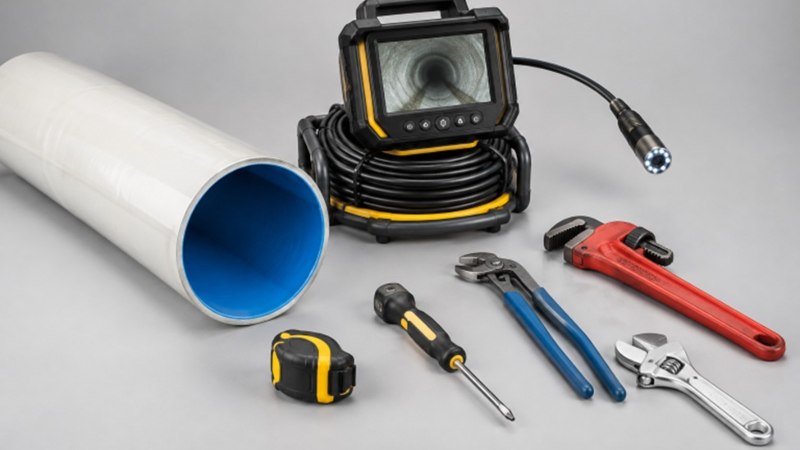
A camera inspection provides the information needed to compare proposals fairly. A thorough assessment should:
- Run a camera through the accessible sewer line.
- Identify the approximate location and depth of significant defects.
- Look for roots, cracks, corrosion, offsets, standing water, and blockages.
- Confirm the pipe’s material, size, shape, and available access points.
- Match the recommended method to the observed condition.
Ask for the recorded video and a written explanation of findings. Those documents make it easier to see whether competing contractors are solving the same problem. If the home is served by the municipal system, homeowners can also review the City of Frederick’s water and sewer service information when determining which agency to contact about a possible public-system issue.
When Pipe Lining May Fit
- The pipe has cracks, leaks, corrosion, or minor joint defects.
- The line retains a usable shape and route.
- Reducing disturbance to paving, gardens, or landscaping is important.
- Excavation equipment would have limited access to the pipe route.
- The project does not require a major increase in pipe size.
When Pipe Bursting May Fit
- The existing pipe is badly damaged or has sections unsuitable for lining.
- A replacement pipe can follow the same general route.
- Access pits can be located without unreasonable disruption.
- Utility locations and surrounding soil conditions allow the work to proceed safely.
- Full replacement is preferable to rehabilitating the existing pipe.
When Traditional Excavation Still Makes Sense
- The sewer line has a major grade issue or persistent low area.
- Cleanouts, fittings, or connections need to be rebuilt.
- The pipe is badly shifted or separated.
- Soil movement or voids around the line require direct correction.
- Local requirements, access limitations, or site conditions prevent trenchless work.
Cost Factors Homeowners Should Review
Compare the complete project scope, not just a method name or base price. Important factors include pipe length, depth, diameter, material, access locations, utility locating, permits, inspections, and restoration of concrete, landscaping, or other affected surfaces. Also compare warranty terms, exclusions, expected maintenance, and the plan for unexpected conditions uncovered during work.
How Property Conditions Affect The Decision
Frederick properties vary widely in lot layout and access. Narrow side yards, retaining walls, slopes, mature trees, patios, and fences can influence both equipment access and restoration costs. Nearby gas, electric, water, and communication lines require careful locating. Soil conditions and groundwater can also affect excavation stability and the practical placement of access pits.
Questions To Ask Before Signing A Proposal
- What did the camera inspection show?
- Why does this method fit this pipe’s condition?
- Will the repair affect pipe diameter or flow capacity?
- Where will access holes or excavation areas be located?
- What restoration is included in the price?
- Are permits, inspections, and utility locates included?
- How long will work and any water-use limitations last?
- What material and labor warranties apply?
- What maintenance is recommended afterward?
- How will unforeseen damage or changed conditions be handled?
Common Questions About Trenchless Repairs
Is Trenchless Repair Always Better Than Digging?
No. Trenchless methods can reduce surface disruption, but the inspection and property conditions must support the chosen method. Excavation can be the more reliable solution for certain structural, alignment, or soil-related problems.
Can A Collapsed Sewer Line Be Repaired Without Excavation?
Sometimes, but not always. The answer depends on the location and extent of the collapse, the condition of surrounding soil, access for equipment, and whether the proposed method can create a dependable repair.
Does Pipe Lining Reduce The Inside Diameter?
A liner occupies some interior space because it forms a new pipe within the old one. Ask the contractor to explain the proposed liner thickness and whether the resulting interior diameter is appropriate for the home’s sewer line.
How Long Can A Trenchless Repair Last?
Rather than relying on a broad lifespan estimate, request the product information, installation details, warranty terms, and maintenance requirements for the specific repair being proposed.
What Warning Signs Suggest A Sewer Line Problem?
- Repeated drain backups or recurring clogs.
- Slow drains at several fixtures.
- Gurgling toilets or drains.
- Sewage odors indoors or outdoors.
- Wet or unusually green areas in the yard.
- Repeated root-related blockages.
Final Takeaway
The right sewer repair approach depends on the pipe, the property, and the owner’s long-term goal. Start with a camera inspection, then compare lining, pipe bursting, and excavation based on condition, access, restoration requirements, total scope, and warranty coverage. A clear proposal should explain not only what will be done, but why that method fits the Frederick property.