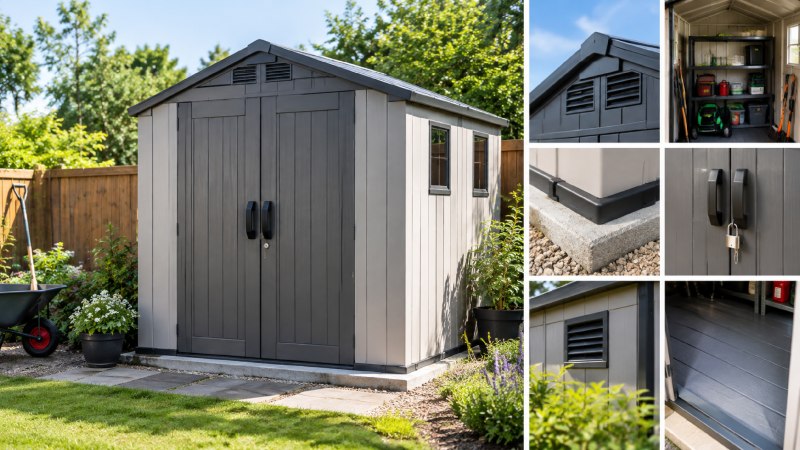
For generations, the British garden shed has meant one thing: a timber building that needs a fresh coat of treatment every spring and slowly loses its battle with the weather.
But a growing number of homeowners are now choosing plastic and resin sheds instead, attracted by the promise of storage that looks after itself.
Modern plastic sheds are a far cry from the thin, flimsy boxes many people remember. Yet buyers are still making a handful of avoidable mistakes that can leave them with a shed that warps, leaks, or even ends up in next door’s garden after a stormy night. Here is what to know before you part with your money.
The End of the Annual Paint Job
The biggest draw of a plastic shed is simple. There is no treating, painting, or preserving.
A timber shed typically needs protecting every year or two to keep rot at bay. Miss a few seasons and the floor softens, the door sticks, and the corners start to crumble.
Plastic and resin cannot rot, are of no interest to wood-boring insects, and only need an occasional wash down with soapy water to look smart again. For busy households, older gardeners, and anyone who would rather spend their weekends planting than painting, that is a huge selling point.
Not the Flimsy Boxes of Old
Earlier plastic sheds earned a poor reputation for good reason. Many faded quickly in the sun, turned brittle in frost, and flexed alarmingly in the wind.
Today’s better models use thicker panels made from tougher, UV-stabilised materials designed to cope with British weather. Many come in wood-effect finishes and softer colours that blend into a garden far more naturally than the stark grey of the past.
Quality still varies, though, which is why the following mistakes are worth avoiding.
Mistake One: Skipping the Base
This is the most common error by some distance. A plastic shed placed straight onto grass or uneven soil will not sit square. Doors stop closing properly, panels come under strain, and water collects around the floor.
A level base of paving slabs, concrete, or a purpose-made foundation kit is essential. It needs to be slightly larger than the shed footprint and completely flat. Taking an extra afternoon to get this right adds years to the life of the building.
Mistake Two: Ignoring the Wind
Plastic sheds are much lighter than timber ones, which makes them easy to put up but also more vulnerable in high winds if they are not properly secured.
Every plastic shed should be anchored to its base using the fixings supplied or a suitable anchor kit. In exposed gardens, placing the shed in the shelter of a wall, fence, or hedge makes a real difference. Before storm season, it is worth keeping an eye on the Met Office’s storm warnings and advice and checking that fixings are still tight, doors are latched, and nothing loose is stored against the walls.
Mistake Three: Buying Too Small
Almost everyone who buys a shed says the same thing a year later: it filled up faster than expected.
Before buying, list everything you plan to store, including the lawnmower, bikes, garden furniture cushions, barbecue, tools, and bags of compost. Then allow room to move around inside. If your garden can take the next size up, it is usually money well spent.
Mistake Four: Forgetting About Security
Sheds are a common target for opportunistic thieves, because they often contain valuable tools and bikes and are rarely as secure as the house.
Look for a model with a lockable door or the ability to fit a proper padlock, and consider adding a shed alarm or a motion-activated light nearby. Marking valuable tools and bikes with your postcode also helps. Neighbourhood Watch’s guidance on shed and garden security offers a useful list of simple, inexpensive steps that make a shed far less attractive to thieves.
Mistake Five: Poor Ventilation
Because plastic sheds are so well sealed against the rain, condensation can build up inside, particularly in autumn and winter. That can lead to damp cushions, rusting tools, and mildew on stored items.
Choose a shed with built-in vents where possible, avoid storing anything wet, and open the door on dry, breezy days to let air circulate. A couple of moisture-absorbing tubs placed inside through the winter months is a cheap and effective extra step.
Check the Floor before You Buy
Not every plastic shed comes with a floor, and this catches plenty of buyers out.
Some models include a built-in plastic floor panel that sits on top of the base. Others are supplied without one and are designed to sit directly on concrete or paving.
A floor adds a layer between your belongings and any ground moisture, and makes the inside easier to sweep. If the model you like does not include one, factor the cost of a floor kit or a properly sealed concrete base into your budget from the start.
It is also worth checking the floor’s weight rating if you plan to store a ride-on mower, a heavy tool chest, or several bikes on stands.
Assembly: Easier than Timber, but Not Foolproof
Most plastic sheds are designed for home assembly, with panels that slot or bolt together. For many models, two people and an afternoon are enough.
That said, a few simple habits make the job far smoother. Lay out every part and check it against the list before starting. Read the instructions through once from start to finish. Choose a calm, dry day, since large panels behave like sails in a breeze.
Above all, do not overtighten screws into plastic. It is a common mistake that can crack panels or strip the fixings, and it is very difficult to undo once done.
Once the shed is up, check that the doors swing freely and close flush. If they do not, the base is almost certainly not level, and it is far easier to fix now than after the shed is full.
Wooden or Plastic: Which Is Right for You?
Plastic is not the right answer for everyone. If you want a potting shed, a workshop, or a cosy garden room, timber is still hard to beat because it is easier to insulate, line, and customise.
But if what you need is dry, secure, low-maintenance storage that will not demand your attention every spring, a well-made plastic shed on a proper base is a very sensible choice.
Keep It Looking Good
Low maintenance does not mean no maintenance. Once or twice a year, give the outside a wash with warm soapy water and a soft brush to remove green algae and grime, particularly on the roof and north-facing walls.
Check that anchor fixings are still tight, clear leaves from the roof and any guttering, and make sure nothing is leaning heavily against the walls from the inside. Ten minutes of attention each spring keeps a plastic shed looking close to new for years.
Where to Start Looking
Garden centres now stock a far wider range of plastic sheds than they did a few years ago, from compact storage units for small patios to full-sized buildings with windows and double doors.
Retailers such as Dobbies carry a good selection in different sizes and styles, and it is worth comparing panel thickness, floor inclusion, and door width across models before deciding.
Get the base right, anchor it firmly, choose a size with room to spare, and a plastic shed could be the last garden storage you need to buy for a very long time.