Why Heat Pump Planning Matters
Heat pumps have become a major consideration for homeowners seeking year-round comfort, efficient operation, and flexible options for heating and cooling different parts of the home. Whether you are researching a whole-home replacement or a single-room solution such as the DIY 5th Generation heat pump system at https://www.mrcool.com/product/diy-5th-generation, the best results begin with the home’s needs rather than a brand name or a square-footage shortcut.
A heat pump transfers heat instead of producing it through combustion. In heating mode, it gathers available heat from outdoors and moves it indoors. In cooling mode, it reverses that process and carries indoor heat outside. The basic heat pump operating process allows one system to handle both seasonal needs.
How Heat Pumps Work In Simple Terms
- An outdoor coil absorbs heat from the surrounding air.
- Refrigerant carries that heat through sealed system components.
- An indoor coil releases heat into the living space.
- When cooling is needed, the system reverses the direction of heat transfer.
Heat pumps condition and recirculate indoor air. They do not normally provide fresh outdoor air as part of standard operation. A tightly sealed home may still need a separate ventilation strategy to manage fresh-air exchange and indoor humidity.
Ducted And Ductless Systems: Which Fits The Home?
Ducted Heat Pumps
Equipment uses existing ducts or ducts installed during a remodel or new construction project. It can distribute conditioned air throughout the home, but the duct system deserves careful inspection. Leaks, poor insulation, undersized returns, and restricted airflow can reduce comfort even when the equipment itself is well selected.
Ductless Heat Pumps
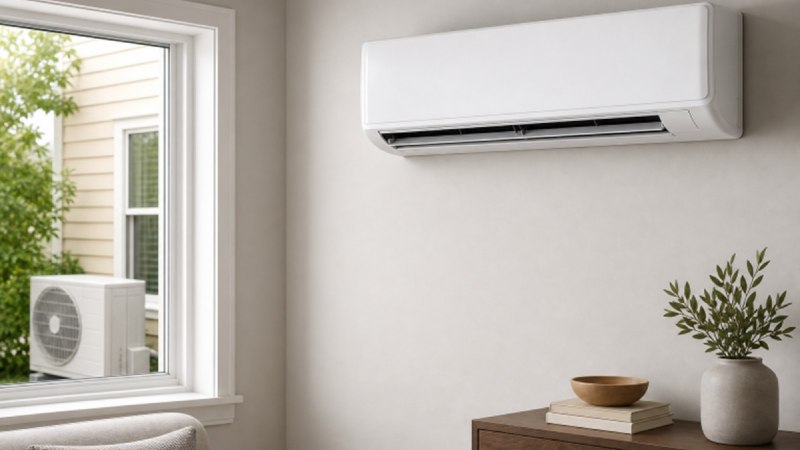
Ductless systems use one or more indoor air handlers connected to an outdoor unit. They can be useful for homes without central ducts, additions, converted garages, bedrooms, offices, and areas where independent temperature control is helpful. Each indoor unit needs a thoughtful location that supports airflow, drainage, access for filter cleaning, and an acceptable appearance.
Start With A Home Comfort Check
Before requesting estimates, consider the factors that determine how much heating and cooling the home actually needs:
- Floor plan, ceiling heights, and room use.
- Window age, orientation, shading, and solar exposure.
- Insulation in the attic, walls, floors, and basement areas.
- Air leakage around doors, windows, plumbing penetrations, and attic openings.
- Local summer heat, humidity, and winter design temperatures.
- Occupancy patterns and preferred indoor temperatures.
A professional load calculation is more dependable than selecting capacity from square footage alone. ENERGY STAR notes that proper sizing should be based on a home-specific assessment, often using an industry-standard Manual J load calculation to estimate heating and cooling requirements.
Check Electrical And Structural Needs Before Installation
Installation planning should include more than the equipment location. An installer should review the electrical panel, available circuit capacity, outdoor unit clearances, refrigerant line routing, control wiring, and condensate drainage. Older homes may need panel upgrades, new circuits, air sealing around wall penetrations, or drainage changes before the system can operate as intended.
Outdoor equipment needs a stable base, open airflow, and room for future service. Avoid placing it beneath heavy roof runoff or in a spot where leaves, snow, landscaping, or stored items can block the coil. A protective structure should not become a tight enclosure that limits airflow or traps moisture.
Compare Efficiency Ratings Without Getting Lost In The Numbers
- SEER2describes seasonal cooling efficiency.
- EER2measures cooling efficiency under specified test conditions.
- HSPF2describes seasonal heating efficiency.
- Heating capacityshows how much heat the unit can deliver at particular outdoor temperatures.
- Low-temperature performancehelps reveal whether a model suits the local winter climate.
The highest published rating is not automatically the best purchase. A correctly sized system with suitable cold-weather capacity, sound installation practices, and a layout that reaches occupied spaces may offer better real-world comfort than a higher-rated system that does not fit the house.
Cold-Weather Performance And Backup Heat
Modern heat pumps can operate in cold weather, but capacity and efficiency change as outdoor temperatures fall. Homeowners in colder regions should ask to see the proposed model’s heating capacity at temperatures that reflect local winter conditions. Some homes use cold-climate heat pumps, electric resistance backup heat, or dual-fuel arrangements that pair a heat pump with a furnace.
Placement Has A Direct Effect On Comfort
For a ductless installation, an indoor unit should direct air toward the occupied portion of the room rather than constantly blowing at a bed, desk, or favorite chair. Furniture should not block the discharge air. For example, a home office may remain warm if its indoor head is installed near a hallway, directing most conditioned air away from the desk area rather than across the workspace.
Installation Quality And Quote Comparisons
A complete installation includes proper sizing, compatible equipment matching, protected line sets, secure electrical connections, correct refrigerant procedures, reliable condensate drainage, airflow checks, and control setup. A startup should include testing in available heating and cooling modes, along with clear instructions for the homeowner.
When comparing quotes, review more than the total price. Confirm the proposed system size, ask how the load was calculated, check whether permits and electrical work are included, and request a written list of excluded work. Also, compare warranty terms, line-set routes, wall repairs, maintenance options, and emergency service availability.
Maintenance Tasks Homeowners Can Handle
- Check and clean washable indoor filters when they are visibly dirty.
- Keep indoor outlets and returns clear of furniture and curtains.
- Remove leaves, grass, and loose debris from around the outdoor unit.
- Watch for unusual sounds, odors, water leaks, or changes in comfort.
- Keep snow and ice from obstructing outdoor airflow.
Contact a qualified technician if the system repeatedly freezes, trips a breaker, loses heating capacity, develops a new grinding sound, or appears to leak refrigerant.
Incentives, Rebates, And Tax Rules
Before purchasing, check current federal, state, local, and utility programs. Eligibility can depend on the equipment model, efficiency level, installation date, household circumstances, location, and contractor requirements. Confirm program details before signing a contract because offerings and rules can change.
Final Planning Checklist
- Improve insulation and air sealing where practical.
- Arrange a professional load calculation.
- Select ducted or ductless equipment based on the home layout.
- Compare heating capacity at realistic winter temperatures.
- Plan electrical work, drainage, and indoor and outdoor placement.
- Compare complete written estimates from qualified installers.
- Learn filter-care steps and schedule routine maintenance.
Conclusion
A heat pump upgrade is most successful when it is treated as a full home-comfort project, not simply an equipment swap. By considering the building envelope, room layout, electrical system, local climate, installation details, and maintenance needs before purchasing, homeowners can make a more confident decision and build a system designed for comfort in every season.